Picture this: you shuffle into the bathroom, half-asleep, ready for a hot shower to jumpstart your day. You turn the tap, hear the pipes groan to life, and then… nothing. Well, not nothing—just a disappointing trickle of lukewarm water that feels more like a betrayal than a blessing. Sound familiar?
If your hot tap is slow to warm up, you’re not alone. This frustrating issue affects countless homes across Essex and beyond, leaving people standing around in their dressing gowns, waiting for the water gods to show mercy. But before you resign yourself to a lifetime of tepid showers and cold tea, let’s get to the bottom of why your hot tap is ghosting you—and more importantly, how to fix it.
Why is my hot water tap slow to warm up?
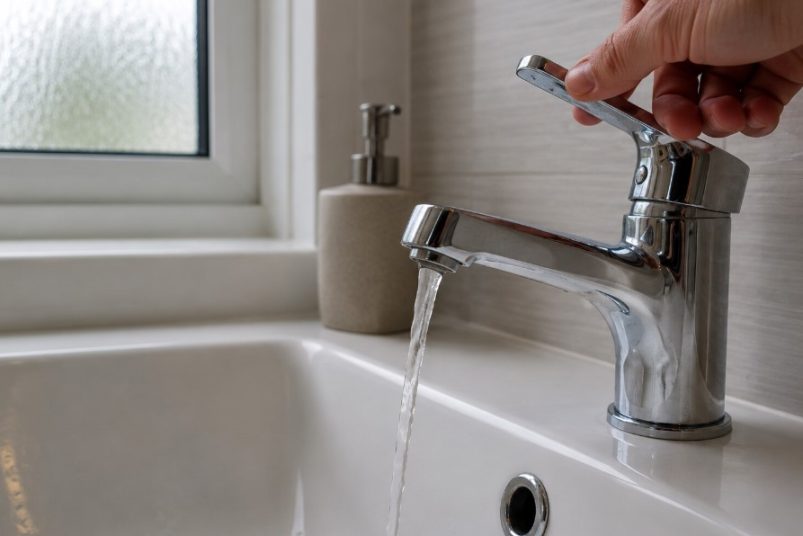
The most common culprit behind a sluggish hot tap is simply distance. If your boiler or hot water cylinder is tucked away in the loft, garage, or at the opposite end of your home from the bathroom, the hot water has quite the journey ahead of it. Every metre of pipe between the heater and your tap is filled with cold water that needs to be pushed out before the hot stuff arrives.
According to Bradford White, a leading water heater manufacturer, this is one of the most obvious reasons for delays—and it’s particularly noticeable in larger homes where the plumbing runs a significant distance. The cold water sitting in those pipes has to flow out of your tap before the hot water can make its grand entrance.
Pipe insulation (or lack thereof) also plays a starring role. Uninsulated pipes lose heat as water travels through them, meaning even when hot water finally reaches your tap, it’s already cooled down along the way. The HSE recommends adequately insulating pipes and tanks to minimise heat loss and maintain water temperature throughout your home’s distribution system.
Think of it like ordering takeaway from across town—the food might leave the restaurant piping hot, but by the time it reaches your door, it’s lost some of its warmth. Same principle, different liquid.
Thermostat troubles and sediment buildup: when your boiler needs a spa day
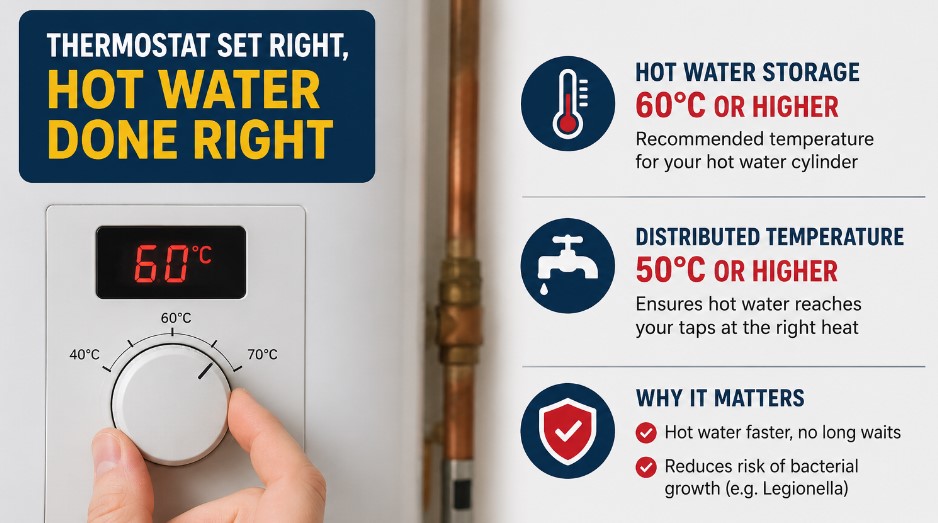
Your boiler or hot water cylinder might be working overtime, but if the thermostat isn’t set correctly, you’ll be waiting forever for hot water. The HSE guidance on legionella control recommends that hot water should be stored at 60°C or higher and distributed at 50°C or higher. If your thermostat is set too low, not only will your water take longer to heat up, but you’re also at risk of bacterial growth in your system.
But here’s where things get really interesting: sediment buildup. Over time, minerals from your water supply—especially in hard water areas like parts of Essex—accumulate at the bottom of your hot water cylinder. This sediment acts like a thermal blanket, preventing heat from transferring efficiently to the water above it. The result? Your boiler works harder, your water heats slower, and your energy bills creep up.
Bradford White notes that sediment buildup is a particularly serious problem in areas with hard water. You’ll likely know if you have hard water because you’ll notice limescale accumulating on shower walls, around fixtures, and on shower heads. If your water heater is struggling because of accumulated sediment, you’ll have to wait longer for the water to get hot.
For combi boilers, limescale can also clog the plate heat exchanger—the component responsible for heating your domestic hot water on demand. As The Glasgow Boiler Company explains, unusual boiler noises, changes in flame colour, and inconsistent hot water supply can all indicate limescale buildup restricting water flow through the heat exchanger.
Common culprits: troubleshooting why your hot tap is giving you cold water
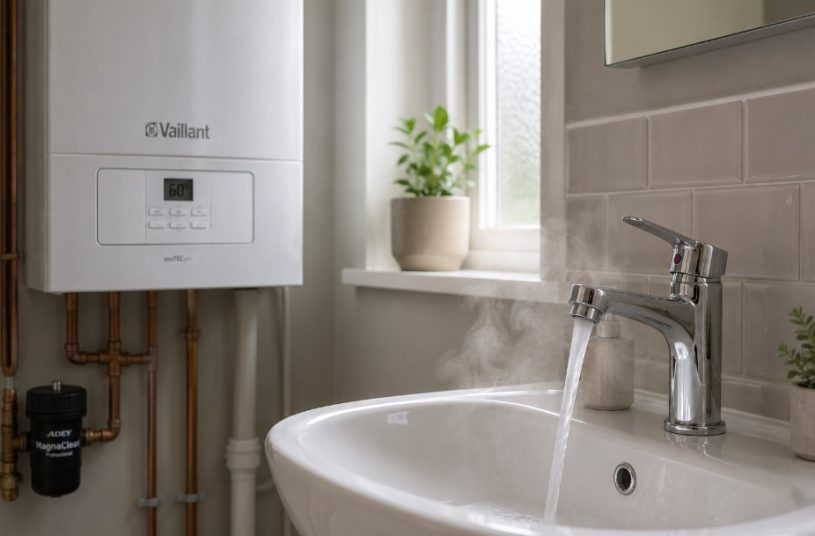
Sometimes the problem isn’t just slowness—it’s that your hot tap is running cold altogether. Here are a few common reasons why:
Dead legs in pipework: These are sections of pipe that branch off but don’t lead anywhere useful, creating stagnant water that cools down. The HSE recommends removing dead legs and dead ends in pipework to reduce stagnant water, which not only slows hot water delivery but also favours bacterial growth.
Low flow rate: If your taps or shower heads have a low flow rate (perhaps due to limescale buildup or old fixtures), it takes longer for the hot water to push through the system. Installing modern, efficient fixtures can help resolve this.
Faulty diverter valve: In combi boilers, a diverter valve switches the boiler between heating mode and hot water mode. If it’s faulty, your boiler might not recognise when you’ve turned on a hot tap, leaving presenting you with an extra cold tap instead.
Airlock in the system: Air trapped in your pipes can prevent hot water from flowing properly. This is more common after maintenance work or if you’ve recently drained your system.
Thermostatic mixing valve (TMV) issues: These valves blend hot and cold water to prevent scalding. The HSE notes that TMVs should be fitted as close as possible to outlets where a scald risk is identified. If your TMV is malfunctioning or set incorrectly, you might experience delays or inconsistent temperatures.
When to DIY and when to call the pros at ALK Emergency Plumbers
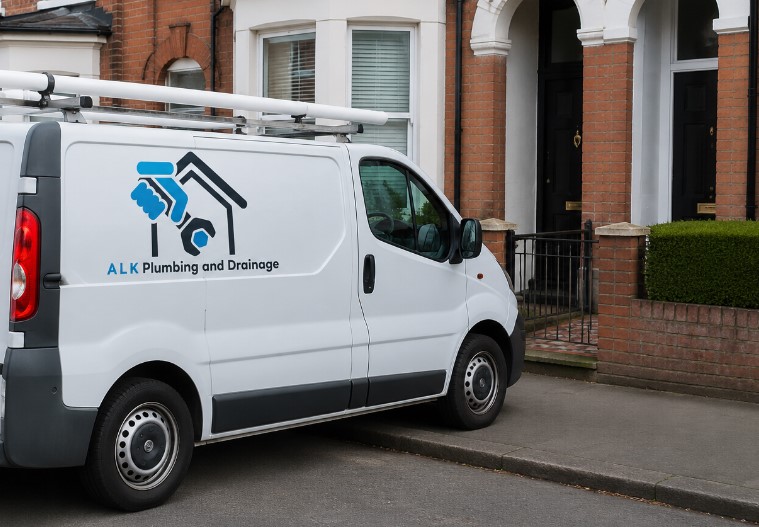
Some hot water issues you can tackle yourself—like adjusting your thermostat, bleeding radiators to release airlocks, or flushing out a shower head clogged with limescale. A bit of DIY maintenance can go a long way toward improving your hot water delivery.
But here’s the thing: plumbing systems are complex, and what seems like a simple fix can sometimes mask a more serious underlying issue. If you’re dealing with any of the following, it’s time to call in the professionals:
- Persistent cold water despite checking obvious issues
- Unusual noises coming from your boiler (banging, whistling, or gurgling)
- Water leaks around your boiler, cylinder, or pipes
- Frequent pressure loss in your system
- Suspected carbon monoxide issues (if you feel dizzy, nauseous, or unwell when your boiler is running)
ALK Emergency Plumbers offer 24-hour emergency callouts across Essex, with a 1-hour response time for urgent issues. Whether it’s the middle of the night or a Sunday morning, their team of Gas Safe registered engineers can diagnose and resolve your hot water problems quickly and safely.
Professional solutions: from power flushing to boiler maintenance
Sometimes your hot water system needs more than a quick fix—it needs professional intervention. Here are some of the solutions ALK Emergency Plumbers can provide:
Power flushing
This process involves pumping a cleaning solution through your central heating system at high velocity to dislodge and remove accumulated sludge, limescale, and debris. It’s particularly effective for older systems that have never been flushed and can dramatically improve hot water delivery and heating efficiency.
Boiler servicing and maintenance of your heating system
Annual servicing by a Gas Safe registered engineer is essential for keeping your boiler running efficiently. A qualified engineer will check your heat exchanger for limescale buildup, test safety controls, adjust thermostat settings, and identify potential issues before they become major problems.
Heat exchanger repair or replacement
If your combi boiler’s heat exchanger is clogged with limescale or corroded, it may need professional cleaning or replacement. This is specialist work that should only be carried out by qualified engineers.
Hot water system upgrades
If your hot water cylinder or boiler is old and inefficient, upgrading to a modern condensing boiler or installing a recirculation pump can provide near-instant hot water at every tap. Bradford White highlights that tankless water heaters with integrated recirculation pumps can deliver instant hot water to every tap in your home—even the farthest one.
New bathroom installations
Planning a bathroom renovation? ALK Emergency Plumbers offer bespoke bathroom and wet room design and installation services, ensuring your new plumbing system is configured for optimal hot water delivery from day one.
Frequently asked questions
Why does my hot tap take so long to warm up in the morning?
Overnight, the water sitting in your pipes cools down completely. When you first turn on the tap in the morning, all that cold water needs to be pushed out before the hot water from your boiler or cylinder can reach you. Distance from the heat source and poor pipe insulation make this worse. Insulating your pipes and ensuring your boiler thermostat is set to at least 60°C (as recommended by the HSE) can help.
Is it normal for a combi boiler to take a while to produce hot water?
Combi boilers heat water on demand, so there’s always a brief delay while the boiler fires up. However, if you’re waiting more than 30 seconds, there may be an issue with the diverter valve, low water pressure, or limescale buildup in the plate heat exchanger. A Gas Safe engineer can diagnose the exact cause.
What about a hot and cold or mixer tap?
Mixer taps can sometimes exacerbate issues if there’s an imbalance in water pressure between the hot and cold supplies. If the cold water is mains-fed and the hot water comes from a gravity-fed system, the difference in pressure can cause inconsistent flow or difficulty in achieving the desired water temperature. Installing a pressure-balancing valve or pump can help resolve these issues, ensuring a steady mix of hot and cold water for consistent performance.
Can limescale build up really affect my hot water that much?
Absolutely. Limescale buildup in your hot water cylinder or heat exchanger acts as an insulator, preventing efficient heat transfer. In hard water areas, this can significantly increase heating times and energy bills. Regular descaling and power flushing can keep your system running smoothly.
How often should I have my boiler serviced?
Annually, at minimum. Regular servicing helps identify issues like sediment buildup, thermostat problems, and component wear before they lead to breakdowns. Many boiler warranties require annual servicing to remain valid.
Could my slow hot water be a safety issue?
Potentially, yes. If your hot water is stored below 60°C to save energy, you’re at risk of legionella bacteria growth. Additionally, a faulty heat exchanger can lead to carbon monoxide leaks—a serious health hazard. If you suspect any safety issues, evacuate your home and contact a Gas Safe engineer immediately.
Get your hot water back on track
Nobody should have to start their day with a disappointing dribble of lukewarm water. Whether it’s sediment buildup, limescale-clogged pipes, or a boiler that’s seen better days, there’s a solution to your slow hot tap woes.
For quick fixes and maintenance tips, you can tackle some issues yourself. But when the problem persists—or when you want the peace of mind that comes with professional expertise—ALK Emergency Plumbers are here to help. With free callouts, a 1-hour emergency response time, and a team of Gas Safe registered engineers covering all of Essex, they’re ready to restore your hot water and save you from any more cold morning surprises.Don’t wait around for water that never warms up. Give ALK Emergency Plumbers a call or get a free quote online today. Your future hot showers will thank you.