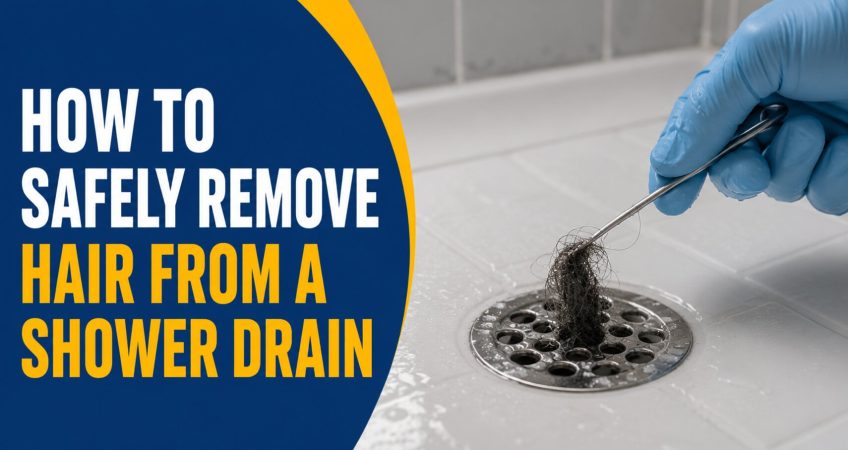
The safest way to remove hair from a shower drain is to lift the drain cover, put on rubber gloves, and pull the hair out manually using a zip tool or drain snake. For mild build-up, a baking soda and vinegar flush can help. Avoid boiling water on plastic pipes and never mix chemical cleaners.
Something sinister is lurking in your shower drain. It doesn’t move, it doesn’t breathe, but somehow it’s managed to slow your shower to a trickle — and it smells absolutely terrible. Yes, we’re talking about the hair-and-soap clump that has taken up residence in your plughole.
The good news? Removing hair from a shower drain is something most homeowners can tackle safely at home. The not-so-good news? There are a few common mistakes that can turn a minor blockage into a plumbing bill. This guide covers the safest, most effective methods — from quick wins you can try right now, to tougher approaches for stubborn clogs — along with clear advice on when it’s time to call in a professional.
Why hair blocks shower drains (and why it gets worse fast)
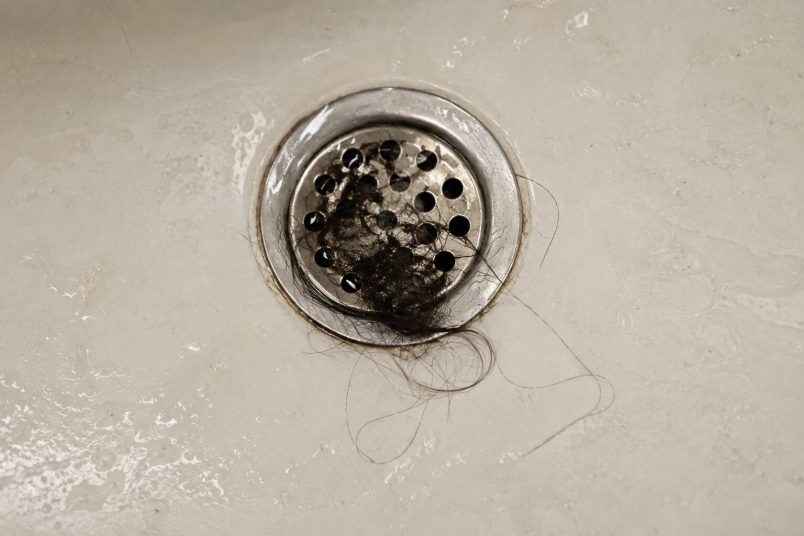
Hair is the leading cause of blocked shower drains. When strands wash down the plughole, they tangle together and form a dense clump. That clump acts like a net, catching soap scum, skin oils, and limescale as they pass through — until water can barely get past at all.
The problem tends to be gradual. You might notice the shower draining a little slower, then a little slower still, until one morning you’re standing in several centimetres of standing water. Households with long-haired family members or multiple users tend to feel this faster. The good news is that catching it early makes removal far easier, which is why a quick monthly check pays dividends.
Safety first: what to do before you start
Before reaching into the drain, take a moment to set things up safely.
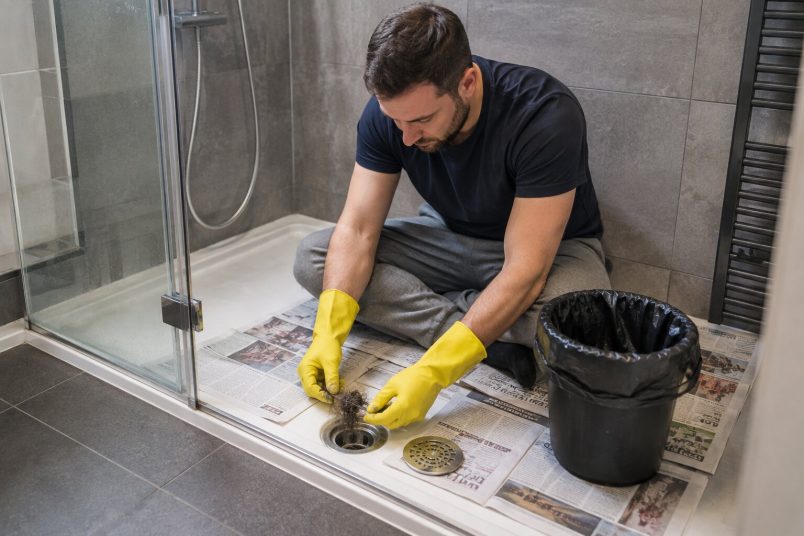
- Put on rubber gloves — you’ll thank yourself later
- Open a window or turn on the extractor fan, especially if you plan to use any cleaning products
- Lay down old newspaper or have a bin bag nearby for the debris you pull out
- If the water is backing up badly or there’s a risk of overflow, don’t attempt DIY. That’s a sign of a deeper blockage that needs professional equipment
Quick checks to confirm it’s a hair blockage
Not every slow-draining shower points to a hair problem. Before starting, look out for these signs of a clogged shower drain:
- Slow drainage or standing water that’s getting progressively worse
- Gurgling sounds from the drain
- Unpleasant smells — damp, musty, or eggy odours are common
- Water pooling directly around the drain cover
If your shower and bathroom sink are both draining slowly at the same time, that could point to a clogged drain further along the line, rather than just the shower trap. In that case, DIY methods are unlikely to reach the source of the problem.
The easiest ways to remove hair from a shower drain (start here)
Work through these methods in order. The simplest approach often does the job.
1. Lift and clean the drain cover
Most drain covers either lift straight out or require one screw to be removed. Once it’s off, you can usually see the hair build-up immediately. Remove as much as you can by hand before moving on.
2. Pull hair out manually
With gloves on, reach in and grab the hair clump. It’s unpleasant, but it’s often the most effective method. Use a pair of tweezers or an old fork if you’d rather not touch it directly. As a simple hand method for hair stuck near the top, you can also straighten a wire coat hanger or wire hanger, bend the wire into a small hook, and pull it out carefully.
3. Use a zip tool or plastic drain snake
A zip tool (sometimes called a drain cleaning strip) is a slim, flexible plastic stick with small barbs along the edge. Insert it into the drain, twist it gently, and pull slowly upwards. The barbs grab the hair and bring it up with the tool, often removing all the hair or a whole lot of it in one pull in many cases. These cost just a couple of pounds from most DIY stores and are brilliant for hair clogs.
4. Try a plunger
Plungers aren’t just for toilets. Place one firmly over the drain, add a bit of water to help form a seal, then pump with steady, even pressure. This can shift hair clogs that are just out of reach.
A safe “shower drain cleaner” approach (featuring baking soda and vinegar)
If manual removal hasn’t fully cleared the drain, a couple of household methods can help shift what’s left — particularly soap scum, light grease, and other debris, as well as lingering odours.
Hot (not boiling) water flush
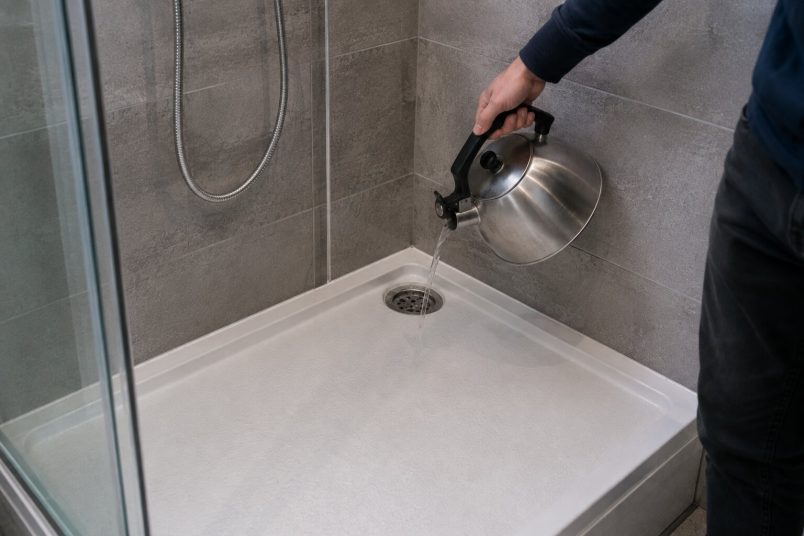
Boil the kettle, let it cool slightly, then pour the hot water down the drain in steady stages. This softens soap deposits and oils. The key word is hot, not boiling — boiling water poured directly onto PVC pipes or ceramic shower trays can cause cracking or warping.
Vinegar and baking soda
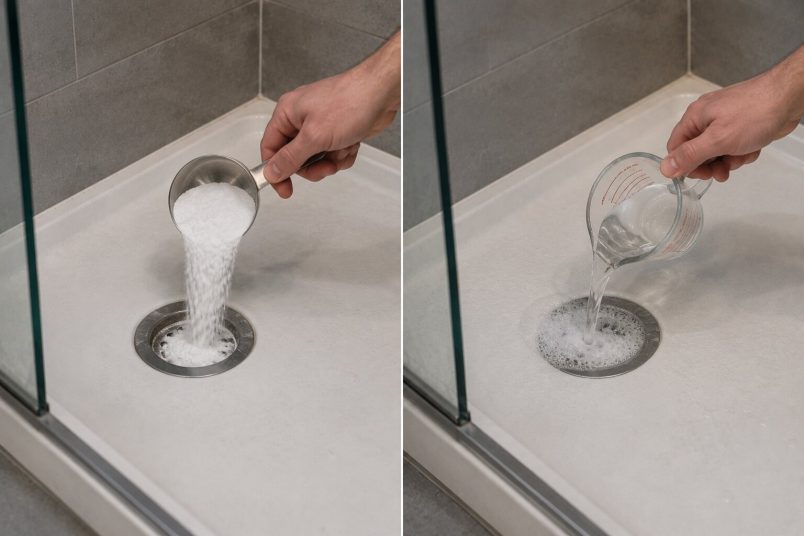
Pour one cup of baking soda down the drain, followed by one cup of white vinegar. Cover the drain and leave it for at least 30 minutes, then flush through with hot water. The chemical reaction creates the fizzing action in the process of loosening minor build-up, and some people leave it for a few hours if the residue is light. It won’t dissolve a serious hair blockage on its own, but it’s a great maintenance step.
A word of caution on commercial drain cleaners: they can work, but use them sparingly. Not all chemical cleaners dissolve a hair clog effectively, and some may just sit on top of the blockage rather than reaching it. Caustic products used too frequently will damage pipe seals — especially in older plumbing systems. Never mix a chemical cleaner with vinegar or any other product, as the reaction can be dangerous. If you do use one, follow the packaging instructions carefully and make sure the room is well-ventilated.
Enzymatic and eco-friendly cleaners are designed to dissolve hair without harsh acids, so they can be a better natural way to handle light organic build-up if you want to avoid harsher formulas.
How to unblock shower drain hair when it’s stubborn
Sometimes the zip tool doesn’t reach far enough, or the clog has compacted over months of build-up, leaving you with a blocked shower drain. In these cases, a longer, flexible drain snake such as a plumber’s snake or similar snaking device can reach deeper into the pipe to break through or retrieve hair build-up and other blockages. If you feel resistance, you’ve likely reached the clog; twist gently, then pull back slowly, and needle nose pliers can help grip anything you bring up to the surface.
If your shower trap is easily accessible (some have a removable U-bend beneath the tray), and you’re confident doing so, cleaning it out directly is very effective. That said, if access requires lifting the tray or dismantling pipework, leave it to a professional. Forcing things in inaccessible areas can cause leaks or damage the trap seal.
Common mistakes to avoid
A few things that seem reasonable but regularly cause more harm than good:
- Pouring boiling water down the drain — fine for metal pipes, but risky for plastic; flushing heavy residue or even toilet paper into bathroom drains can also contribute to other blockages
- Overusing chemical drain cleaners — repeated use strips pipe seals over time, and the above methods are usually safer first steps for a typical hair clog before turning to stronger products
- Mixing products — never combine chemical cleaners with vinegar or bleach
- Forcing tools — jamming a tool in too hard can damage the trap or push debris further down; don’t treat a shower clog like a sink or toilet blockage, since the cause and fix can differ
- Ignoring repeat blockages — if your shower keeps blocking despite regular cleaning, there may be a deeper drainage issue worth investigating
How to stop hair blocking your drain again
Prevention genuinely is easier than the cure here, and a few simple habits help prevent hair from building up in the drain.
- Fit a shower drain hair trap, drain stopper, or plug — inexpensive, effective, and easy to clean after each shower, and easy to pick up at a local hardware store
- Brush long hair before showering — cuts down on shedding into the drain
- Use a shower cap when appropriate — helps keep hair out of the drain
- Rinse with hot water after every shower — a 30-second flush washes soap residue away before it hardens
- Monthly baking soda and vinegar clean — keeps minor build-up and smells in check
- Limit oily products and rinse well — helps reduce stubborn build-up in the bath or shower drain
- In hard water areas, descale your drain every few months to prevent limescale from accumulating inside the pipe and creating surfaces where hair sticks more easily
- If you bathe pets, brush them before a bath or in the tub to reduce fur going down the drain
- In shared households, a weekly quick check and clean of the drain cover makes a real difference
When to call in a plumber
Most hair blockages respond well to the methods above. But some situations call for professional help, and it’s better to recognise them early rather than wait until something worse happens.
Call a professional if:
- The blockage returns within a few days of clearing it
- More than one drain in the house is running slowly
- There are persistent bad smells that don’t improve with cleaning
- Water is backing up and you only have one bathroom
At ALK Emergency Plumbers, we cover all of Essex — including Southend, Chelmsford, Hornchurch, Brentwood, and Benfleet — and we’re available 24/7 for drainage emergencies. We offer free call-outs, aim for a 1-hour emergency response, and use high-pressure water jetting to clear stubborn blockages quickly and safely, without risking your pipework.
If you’ve tried the DIY route and the drain still isn’t right, getting us in sooner rather than later usually saves both time and money. It’s nearly always faster than it sounds.
Frequently asked questions
What’s the safest way to remove hair from a shower drain?
The safest method is manual removal. Remove the drain cover, put on rubber gloves, and use a zip tool or plastic drain snake to pull the hair out. This avoids chemicals entirely and gives immediate results without risking damage to your pipes.
Does baking soda and vinegar actually work for hair clogs?
It helps, but it won’t dissolve a heavy hair blockage. The baking soda and vinegar reaction is most effective for loosening mild soap scum, reducing smells, and general maintenance, and it does more to support upkeep than to unclog hair on its own. For actual hair clogs, physical removal is far more reliable.
Are chemical drain cleaners safe to use in showers?
In small doses and used occasionally, yes — but with care. Caustic drain cleaners can corrode pipe seals over time, especially in older systems, and not all formulas work equally well on hair. Never mix them with other products, follow the instructions on the packaging, ensure proper ventilation, and treat them as a last resort rather than a first response.
How do I know if the blockage is deeper than the shower drain?
If multiple drains in your home are slow at the same time — your shower and bathroom sink, for example — it suggests the blockage is further down the shared pipe rather than in the shower trap itself. DIY tools won’t reach that far, so professional drainage equipment is the appropriate next step, and a plumber may use a camera inspection if the source is not obvious.
Why does my shower drain smell even after I remove the hair?
Smell often comes from soap scum and bacteria that’s built up on the inside walls of the pipe, not just from the hair itself. A baking soda and vinegar flush after removing the blockage usually helps. If the smell persists, it may indicate deeper build-up or a drainage issue further along the pipe.
How often should I clean my shower drain?
A quick visual check and hair removal every one to two weeks is ideal, especially in busy households. A deeper clean with baking soda and vinegar once a month keeps smells and minor build-up under control.
Can a plumber unblock shower drain hair without removing tiles or the shower tray?
In most cases, yes. Professional drainage engineers use tools such as drain snakes and high-pressure water jetting to clear blockages through the drain opening, without any need to lift tiles or dismantle the shower tray. It’s far less disruptive than it sounds.
What should I do if water is backing up and I only have one bathroom?
Stop using the shower and call a plumber as soon as possible. Continuing to run water when it can’t drain freely increases the risk of overflow and water damage. At ALK, we offer 24/7 emergency call-outs with a 1-hour response aim across Essex — call 0800 328 2489 and we’ll get it sorted.
Got a stubborn blockage that won’t budge?
If you’ve worked through the methods above and the shower’s still draining like a swimming pool, it’s time to call in the professionals. At ALK Emergency Plumbers, we’re available 24 hours a day, 7 days a week across Essex, with free call-outs and a 1-hour emergency response aim. No hidden charges, no fuss.
Call us free get a free quote online and we’ll have your drains flowing freely again in no time.