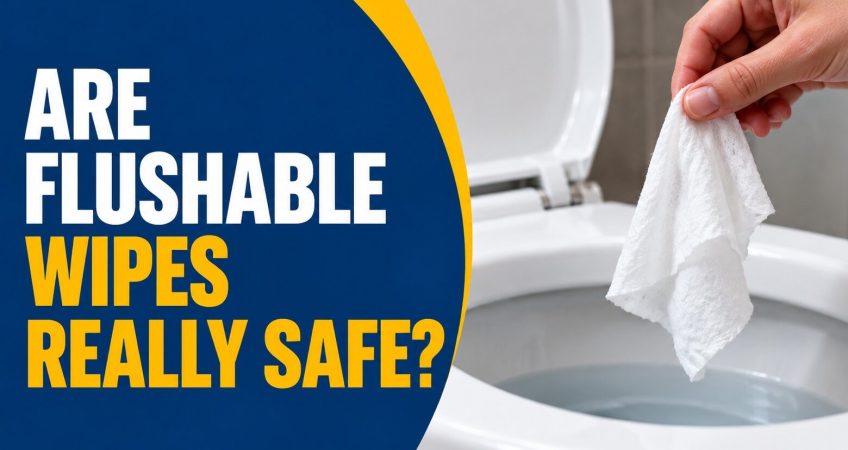
Not really. Despite the label, most “flushable” wipes don’t break down like toilet paper does. They’re built to stay strong when wet, which means they can snag in pipes, tangle with grease and fat, and lead to blocked toilets or drains. Wet wipes are responsible for around 75% of the UK’s 300,000 annual sewer blockages, according to Water UK. If you’re dealing with a blockage right now, we can help—but let’s explain why this happens in the first place.
We’ve lost count of the number of call-outs we’ve attended across Essex that started with someone innocently reaching for a “flushable” wipe. It’s such a common habit that most people don’t think twice about it. But that little word on the packaging is doing a lot of heavy lifting it probably shouldn’t.
The short answer (and why it’s not as simple as the label)
Generally speaking, no—flushable wipes aren’t safe for most real-world plumbing, even though the packaging suggests otherwise. Manufacturers test these products in laboratory conditions that don’t always reflect what’s actually going on in your pipes: bends, low water flow, older fittings, and years of built-up scale.
A wipe might pass a flushability test in a straight, well-flowing pipe. Your home’s plumbing, on the other hand, rarely offers ideal conditions. That mismatch is exactly why we get so many calls about blocked toilets that “should” have been fine to flush.
What “flushable” actually means (and what it doesn’t)
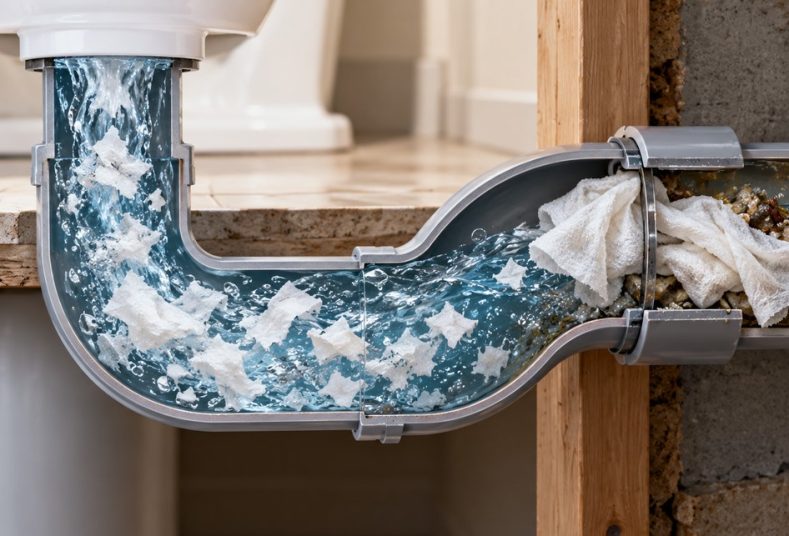
Here’s the bit that catches people out: “flushable” doesn’t mean the same thing as “biodegradable.” According to The Rivers Trust, the flushable label really just signals that a wipe is easier to flush if necessary—not that it should be flushed as a matter of course.
Toilet paper is designed to disintegrate within seconds of hitting water. Wipes are engineered to do the opposite—to stay strong when wet, so they don’t fall apart mid-use. That strength comes from fibres and binding agents that simply don’t loosen up once they’re in your pipework. Even one or two wipes can catch on a rough joint or a slight bend, creating a snag point that other debris builds up around.
How wipes cause blockages in toilets and drains
Think of it as a wipe’s unfortunate journey:
- The toilet trap and bends: This is often where the first snag happens, especially in older toilets with tighter curves.
- Soil pipe joints and rough edges: Wipes catch on imperfections that toilet paper would simply flow past.
- Drain runs, fats and grease: Once a wipe is lodged, it acts like a net—grabbing hold of grease, food scraps and anything else heading down the pipe.
- The wider sewer network: Multiply this across thousands of households, and you get fatbergs—the enormous, solidified masses of wipes and fat that clog entire sewer sections.
It’s a genuinely unpleasant chain reaction, and it’s why a blocked toilet wipes issue rarely stays a small problem for long.
Signs you’ve got a wipe-related blockage brewing
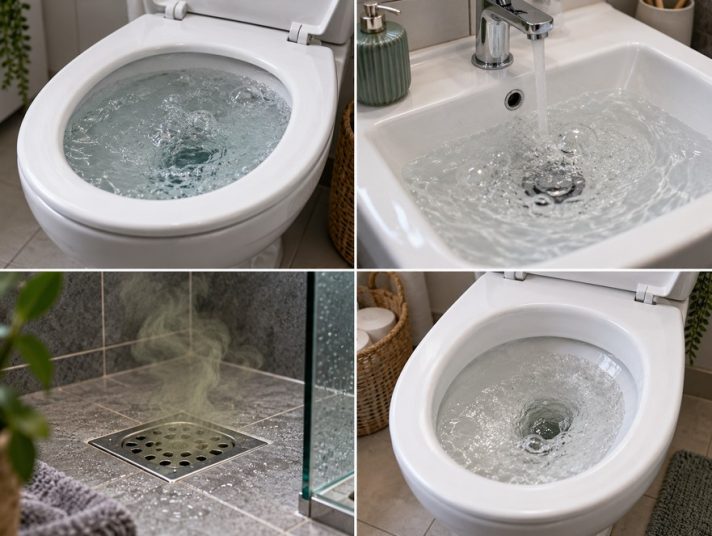
Keep an eye out for:
- A slow flush, or water that rises higher than usual before draining
- Gurgling sounds from the toilet, sink, or shower
- Unpleasant smells that won’t shift
- A blockage that seems to “come and go”—this usually means it’s partial, not solved
If any of this sounds familiar, it’s worth acting before a partial blockage turns into a full one.
What to do if your toilet is blocked with wipes
Here’s what we’d suggest, in order:
- Stop flushing. Repeated flushing just risks an overflow.
- Turn off the water supply to the toilet if the bowl is close to overflowing.
- Try a plunger. Make sure it forms a proper seal over the outlet and use firm, steady strokes rather than frantic jabbing.
- Try warm (not boiling) water with a squeeze of washing-up liquid. This can help loosen things enough for a plunger to finish the job.
- A toilet auger can work well if you’re comfortable using one.
- Avoid chemical drain cleaners. They’re rarely effective on wipes and can damage older pipework.
If none of that shifts it, or the blockage keeps coming back, don’t keep flushing and hoping. That’s usually a sign there’s a bigger build-up further down the line, and it’s time to call in a professional.
What not to flush (your drains will thank you)
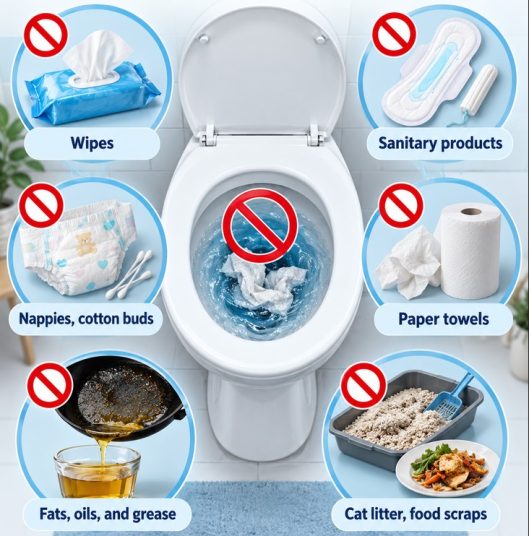
Beyond wipes, here’s a handy list of what should always go in the bin instead:
- Wipes of any kind, including “flushable” ones
- Sanitary products
- Nappies, cotton buds, and dental floss
- Paper towels and cleaning cloths
- Fats, oils, and grease
- Cat litter, food scraps, and hair
As the saying goes: only the 3 Ps—pee, poo, and paper—should ever go down the loo.
“But we’ve always flushed them…” why it suddenly becomes a problem
We hear this a lot. The truth is that pipework changes over time. Scale builds up, joints wear, and low-flow toilets (great for saving water) mean less force to carry waste away. Heavy rainfall can also put extra pressure on the wider sewer network.
One wipe might pass through without issue. Ten, twenty, or a hundred over months and years? That’s how a snag point turns into a full blockage.
Better alternatives to flushable wipes
- Bin it. A small lidded bin in the bathroom makes this an easy habit to build.
- Toilet paper, or a bidet attachment, if you’re looking for that extra-clean feeling without the plastic fibres.
- Genuinely biodegradable options exist, but always bin them rather than testing your luck with a flush.
When it’s time to call in a pro (and how we can help)
If you’ve tried the basics and the blockage isn’t budging—or it keeps returning—it’s time to bring in the professionals. We offer a 24-hour emergency plumber service across Essex, with a 1-hour response time that we take seriously, and free call-outs on every job.
Whether it’s a stubborn blocked toilet, a deeper blocked drain, or you need high-pressure water jetting to clear a more established blockage, our team has the tools and experience to sort it properly, not just temporarily.
Frequently asked questions
Are flushable wipes really safe for your drains?
Not reliably. They’re designed to survive contact with water long enough to be useful, which means they often don’t break down before causing a snag somewhere in your pipework.
Can “flushable” wipes still cause a blocked drain?
Yes. The label refers to ease of flushing, not full breakdown. Even flushable wipes can catch on pipe joints and contribute to blockages over time.
How do I unblock a toilet blocked with wipes?
Start with a plunger and warm water with washing-up liquid. If the blockage doesn’t clear, or keeps returning, call a plumber rather than reaching for chemical cleaners.
Will a plunger work on blocked toilet wipes?
Often, yes, especially for a fresh, single blockage. Recurring or multiple blockages usually mean something’s built up further down the drain and needs professional attention.
Are flushable wipes safe for older properties or shared drainage?
No. Older pipework with tighter bends, scale build-up, or shared drainage runs is even more prone to snagging wipes, making blockages more likely.
Are wipes okay for septic tanks?
No. Wipes don’t break down in septic systems either, and can cause build-up that affects the tank’s efficiency.
What are the early signs of a wipe-related blockage?
Slow flushing, gurgling sounds, bad smells, and water that rises higher than normal before draining are all early warning signs worth acting on.
Should I use chemical drain cleaner for wipes?
We’d avoid it. Chemical cleaners rarely shift wipe-related blockages and can damage pipes, especially older ones.
When should I call an emergency plumber in Essex?
If a blockage doesn’t clear after basic attempts, keeps recurring, or affects multiple fixtures, it’s time to call a professional before it turns into a bigger issue.
Don’t let a wipe ruin your week
A blocked toilet is never convenient, and it’s usually a sign of a bigger issue building up out of sight. If you’re dealing with a blockage right now, or just want peace of mind that your drains are in good shape, give us a call or get a free quote through our website. We’re available 24/7 across Essex, our call-outs are always free, and we aim to be with you within the hour.