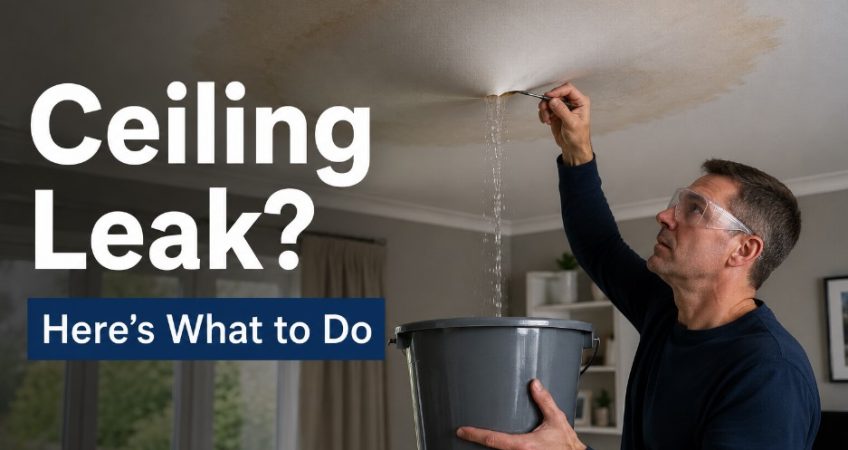
You’re sitting on your sofa, enjoying a cup of tea and watching your favourite television show, when you hear a soft, rhythmic sound. Drip. Drip. Drip. You look up, hoping it is just your imagination. Unfortunately, the large, spreading damp patch above your head confirms your worst fears. Your ceiling is crying, and your living room is about to become an indoor swimming pool.
Finding water leaking through ceiling plasterboards is a stressful experience for any homeowner. Panic usually sets in immediately. Your mind races through visions of collapsed plaster, ruined carpets, and astronomical repair bills. Take a deep breath. While this is certainly an urgent situation, keeping a cool head will help you minimise the damage and get things sorted quickly.
As professional drainage and plumbing experts, we’ve seen our fair share of indoor rain showers across Essex. We know exactly how alarming a ceiling leak emergency can be. That is why we have put together this comprehensive guide to help you navigate the chaos, protect your property, and understand exactly when it is time to put down the mop and pick up the phone.
Step 1: Immediate damage control
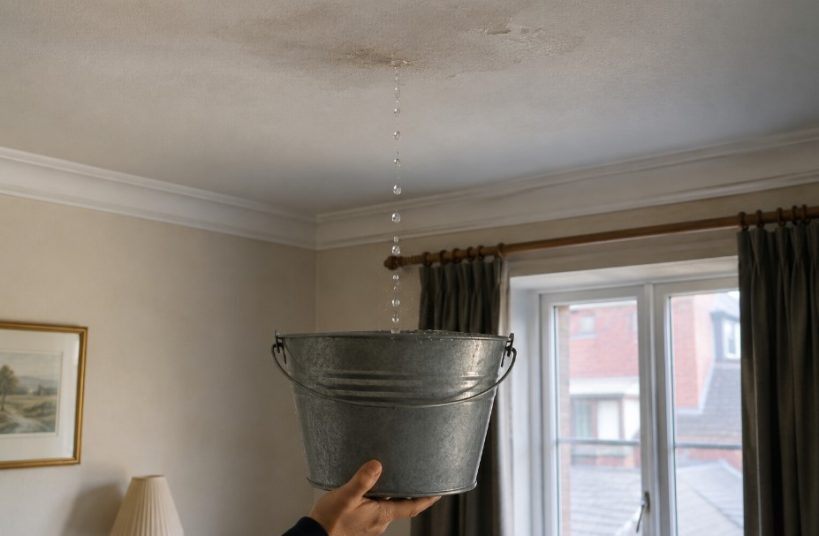
Before you even think about playing detective, you need to play damage control. Water follows the path of least resistance, and right now, that path leads directly to your favourite belongings.
First things first, grab a bucket, a large cooking pot, or a plastic storage tub—anything that holds liquid—and place it directly under the drip. If the water is splashing out of the container and onto the floor, drape an old towel over the bottom of the bucket to absorb the impact and muffle that annoying dripping sound.
Next, save your valuables. Move that expensive Persian rug out of the splash zone. Push your electronics, wooden furniture, and any sentimental items well away from the damp area. If you cannot move larger pieces of furniture, throw a waterproof tarp or thick plastic sheeting over them.
Most importantly, you need to stop the flow of water. Locate your home’s main water shut-off valve, which is usually found under the kitchen sink, in the airing cupboard, or near the front door. Turn the stopcock clockwise to completely shut off the water supply to your house. This single action is your best defence against a minor leak turning into a catastrophic flood. Furthermore, if water is leaking near light fixtures or ceiling fans, go straight to your fuse box and turn off the electricity to that room to prevent a nasty shock.
Step 2: Investigating the source of leaking water
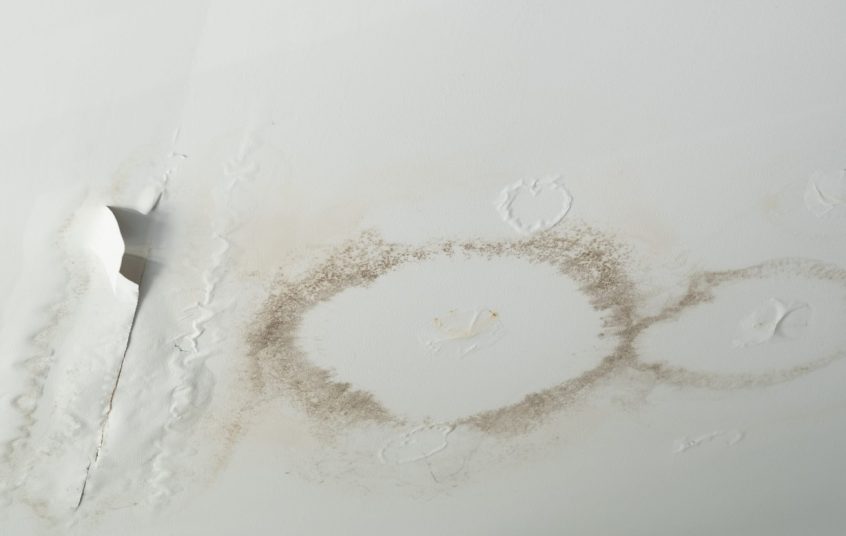
Once your living room is reasonably secure and the main water supply is off, it is time to figure out where the moisture is coming from. Because water travels along joists and pipes before breaking through the plasterboard, the source of the leak is rarely directly above the drip.
The most common culprit? A leak upstairs bathroom setup. Head upstairs and inspect the room directly above the damp patch. Look for obvious signs of trouble. Did someone leave the bath running? Is there a massive puddle forming around the base of the toilet?
Check the seals around your shower tray and bathtub. Worn or cracked silicone sealant allows water to easily seep beneath the floorboards every time someone takes a shower. Inspect the pipes connecting to your sink and toilet for any visible drips or condensation. Sometimes, the issue is not a faulty pipe at all, but rather a blocked drain causing water to back up and overflow. If you notice damp floorboards, peeling vinyl flooring, or a musty smell in the bathroom, you have likely found the general area of the problem.
Step 3: Draining the bulge safely
Sometimes, the water pooling above your ceiling does not immediately break through. Instead, it gathers and stretches the paint and plaster, creating a terrifying, saggy water balloon right above your head.
Leaving a bulging ceiling to drain on its own is incredibly dangerous. The accumulated weight of the water can eventually cause the entire section of the ceiling to collapse, bringing down heavy plaster, dirty water, and potentially even light fixtures onto whatever (or whoever) happens to be below.
To prevent a massive collapse, you need to relieve the pressure. It sounds counterintuitive, but you actually need to pierce your ceiling. Put down a large bucket directly beneath the lowest point of the bulge. Put on some safety glasses to protect your eyes from debris, and take a screwdriver or a small drill bit. Carefully poke a small hole right in the centre of the sagging area.
Stand back as the trapped water drains down into your bucket in a controlled stream. By making a small, deliberate hole, you allow the water to escape safely, preserving the structural integrity of the surrounding plasterboard and making the eventual repair job much smaller.
Why DIY has its limits
Tackling a bit of loose sealant or tightening a visible U-bend is perfectly fine if you are handy with a wrench. However, plumbing is a complex, interconnected system, and hidden leaks are notoriously difficult to fix without the right tools and expertise.
Trying to rip up floorboards or cut into drywall to find a mystery leak usually results in more harm than good. You might accidentally slice through a different pipe or damage your electrical wiring. Patching a symptom without fixing the root cause guarantees that the leak will return, usually at the worst possible moment.
When water is actively causing structural damage to your home, DIY efforts simply will not cut it. You need a fast, professional, permanent solution. This is exactly where the dedicated team at ALK Emergency Plumbers steps in.
Our 24/7 emergency response in Essex
A plumbing disaster does not care if it is a Sunday afternoon, a bank holiday, or the middle of the night. Because water damage worsens by the minute, waiting around for days to get a repair is not an option.
At ALK Emergency Plumbers, we take pride in our rapid response. We provide 24-hour emergency plumbing services across Essex, covering Southend, Hornchurch, Chelmsford, Canvey, Brentwood, Benfleet, and beyond. We take our commitment to a 1-hour emergency response time seriously. When you call us with a ceiling leak emergency, we dispatch an experienced, fully qualified plumber to your doorstep immediately.
Better yet, we do not charge for call-outs. Our transparent pricing means you only pay for the work we actually do, saving you money during a stressful situation. Our team arrives fully equipped to diagnose hidden leaks, repair burst pipes, and restore your plumbing to perfect working order, getting your home back to normal with minimal fuss.
Frequently asked questions about ceiling leak emergency situations
Is a leaking ceiling an emergency?
Absolutely. A ceiling leak is always an emergency because it indicates water is pooling where it shouldn’t be. Left untreated, it causes severe structural damage, encourages harmful mould growth, and creates serious electrical hazards.
Who do I call for a leak through the ceiling?
You should call an emergency plumber immediately. While you will eventually need a decorator or plasterer to repair the aesthetic damage to the ceiling itself, a plumber is essential to identify and stop the actual source of the water leak.
Will my ceiling collapse from water damage?
Yes, it can. Plasterboard becomes incredibly heavy and brittle when saturated with water. If you notice a large bulge forming, pierce a small drainage hole to relieve the pressure and prevent a sudden, dangerous collapse.
How do I turn off the mains water?
To turn off the mains water supply, locate your home’s stopcock or main shut-off valve. This is typically found under the kitchen sink, in a utility room, or near the main water supply pipe where it enters your property. Once located, turn the valve clockwise to shut off the water supply completely. If you are unable to locate the indoor stopcock or it’s not functioning properly, there may also be an outdoor stop valve near the boundary of your property, often located in a covered box.
Is water leaking through the ceiling usually covered by home insurance?
Whether water leaking through the ceiling is covered by your home insurance provider depends on the cause of the leak and the specific terms of your insurance policy. Generally, most home insurance policies cover sudden and accidental damage caused by leaking water, such as from a burst pipe or other plumbing fixtures. However, if the leak is due to gradual wear and tear, poor maintenance, or unresolved issues, it is unlikely to be covered. It’s best to review your policy or consult with your insurance provider to understand your coverage and any exclusions related to water damage.
Call the experts for peace of mind
Dealing with a water leaking through the ceiling scenario is a nightmare no homeowner wants to face. However, by acting quickly to secure your belongings, turning off the water supply, and safely draining any bulges, you can keep the chaos to a minimum.
Once the immediate danger is managed, leave the hard work to the professionals. With guaranteed free call-outs, transparent pricing, and a rapid 1-hour response time across Essex, ALK Emergency Plumbers are always ready to help.
Do not let a plumbing disaster ruin your week. If you are dealing with a leak, give our friendly team a call today, and let us sort out the problem fast.