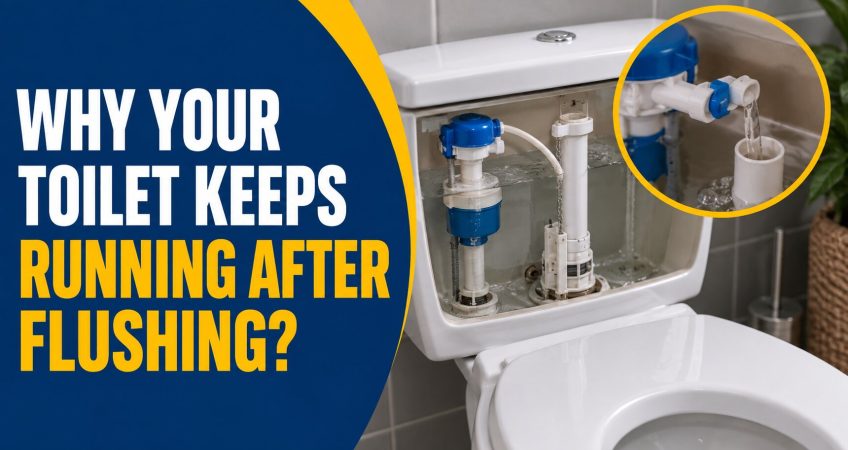
A toilet keeps running after flushing when water can’t stop flowing through the cistern. The usual culprits are a float set too high, a fill valve that won’t shut off, or a leaking flush valve seal letting water trickle into the bowl. Most fixes are simple, but a running toilet can waste up to 400 litres of water a day if left alone.
That soft, endless hiss coming from the bathroom. You’ve flushed, walked away, and yet the toilet is still whispering to itself twenty minutes later. It’s one of the most common problems we get called out for across Essex, and while it’s rarely dramatic, it can quietly drain your patience (and your water bill) if you ignore it.
The good news? A running toilet is almost always fixable. Sometimes it’s a two-minute adjustment. Other times it needs a worn part swapped out. In this guide, we’ll walk you through what’s actually going on inside that cistern, the safe checks you can do yourself, and the moment it’s worth picking up the phone.
What “running” actually means (and why it matters)
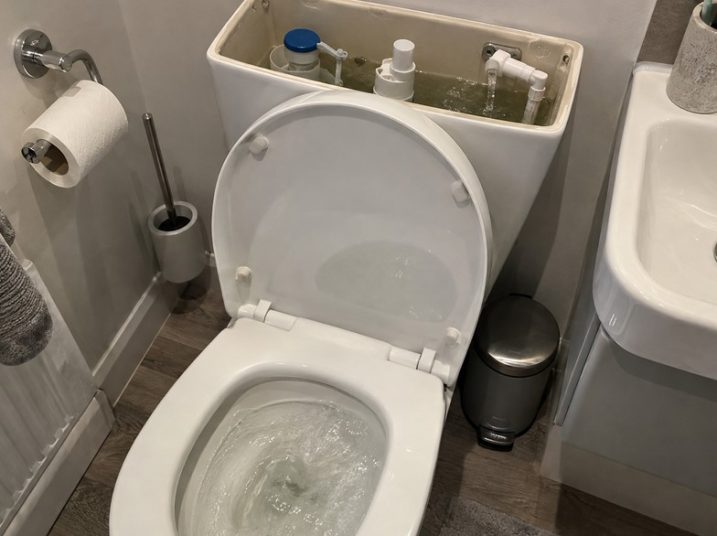
Before we start poking around, it helps to know what “running” looks like. A toilet that keeps running usually shows up in one of three ways:
- A constant refill sound that never quite stops
- Intermittent topping up — the cistern refills for a few seconds every few minutes, seemingly out of nowhere
- A faint trickle into the bowl, often so quiet you only notice it at night
None of these are the end of the world. But here’s the bit that surprises people: according to Yorkshire Water (2025), a leaking toilet can waste between 200 and 400 litres of water every single day. The Consumer Council for Water backs this up, putting the upper figure at around 400 litres daily. That’s roughly double the average person’s daily water use — vanishing straight down the pan.
If you’re on a water meter, that adds up fast.
The most common reasons a toilet keeps running after flushing
Most running toilets come down to one of a handful of causes. Let’s go through them.
The float is set too high or sticking
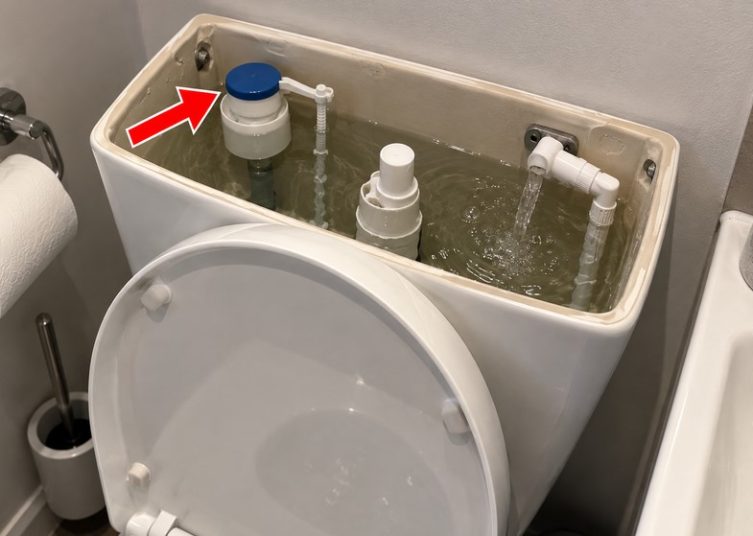
Inside your cistern sits a float — a small buoyant part that rises with the water and tells the fill valve when to stop. If it’s set too high, the water level climbs past where it should, and the toilet keeps trying to top up (or spills into the overflow).
Quick check: Lift the cistern lid and watch the float as the tank fills. Is it snagging on anything? Sitting oddly high? A float that catches on the side of the cistern is a classic offender.
The fill valve isn’t shutting off properly
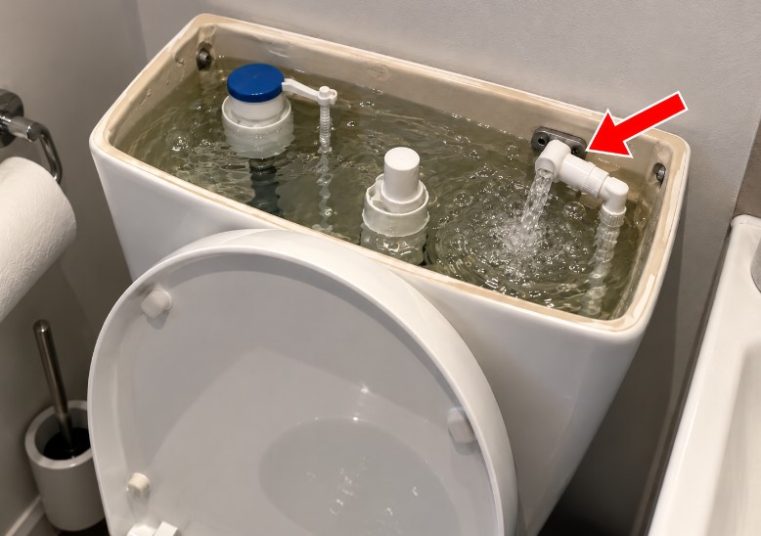
The fill valve is the part that lets fresh water into the cistern. Over time, grit, limescale, or a worn washer can stop it sealing fully — so it keeps dribbling water in even when the tank is full. Older ballcock-style valves and modern plastic fill valves can both suffer from this, though the older ones tend to wear out sooner.
If the water level is right but you can still hear a faint hiss, a tired fill valve is often to blame.
The flush valve seal is leaking
This is the silent culprit. The flush valve sits at the bottom of the cistern and releases water into the bowl when you flush. If its seal (sometimes called a flapper, though UK cisterns often use a diaphragm washer or siphon setup) is worn or dirty, water sneaks through into the bowl. The cistern then keeps refilling to replace it — round and round it goes.
Easy test: Add a few drops of food colouring to the water in the cistern. Don’t flush. Wait ten minutes. If colour appears in the bowl, the flush valve seal is leaking.
The chain, lever, or flush button is holding the valve slightly open
Sometimes the mechanism just doesn’t reset properly. A flush button can stick, a lever linkage can sit out of line, or a chain (on older systems) can be too short and hold the valve a fraction open. Enough to let water escape, not enough to be obvious.
Give the button or handle a gentle wiggle. If the running stops, you’ve found your answer.
Overflow and water level issues
If the water level creeps too high, it spills into the overflow — which brings us neatly to a problem worth its own section. More on that shortly.
Quick checks you can do before you panic
No toolbox heroics required. A few sensible checks can often pinpoint the problem in minutes.
First, a word on safety: keep away from electrics near water, and don’t overtighten plastic fittings — they crack more easily than you’d think.
- Lift the lid and check whether the water level sits near the top of the overflow pipe. It shouldn’t.
- Gently move the float up and down to see if the fill valve responds and shuts off.
- Do the dye test with food colouring to check the flush valve seal.
- Check the flush button or handle isn’t sticking.
- Look around the base and pipework for any obvious drips.
Simple running toilet fix options (and when they’re worth trying)
A running toilet fix can be wonderfully straightforward — or it can turn into a saga if the parts are ancient. Here’s a realistic rundown.
- Adjust the float height. On many valves, a screw or clip lets you lower the water level so it stops feeding. This alone solves plenty of cases.
- Clean the fill valve. Grit and limescale are common offenders. A gentle clean can restore a proper seal.
- Replace the flush valve seal or diaphragm. If the dye test pointed here, a new seal usually does the trick.
- Replace the fill valve. If it’s old, worn, or corroded, a full swap is often more reliable than patching it up.
A quick honesty note: if the plastic parts are brittle or the fittings are corroded, DIY can backfire. We’ve been called out to more than one “quick fix” that turned into a soaked bathroom floor. If something feels stuck or fragile, it’s usually cheaper to call us than to replace a cracked cistern.
What if the toilet overflow pipe is leaking?
The overflow pipe is your cistern’s safety net. If the water level rises too far, the overflow carries the excess away — traditionally out through an external wall — rather than letting the cistern flood your bathroom.
So if you spot a toilet overflow pipe leaking, it’s a sign something upstream isn’t working. Common signs include:
- A steady drip from a pipe outside your wall
- A constant trickle into the bowl or down the overflow
The usual causes are a water level set too high, a fill valve that won’t shut off, or a float that’s stopped doing its job. Whatever the trigger, the message is the same: water is going somewhere it shouldn’t.
Why does it matter? Because a persistent overflow can lead to water damage, damp, and mould — and in flats, water making its way to a neighbour below is a headache nobody wants. If the overflow won’t stop, turn off the isolation valve behind the toilet (or your stopcock) and get a plumber out.
When a running toilet becomes an emergency
Most running toilets aren’t urgent. But sometimes they cross the line. Call for emergency help if:
- The water won’t stop even after adjusting the float or closing the isolation valve
- Water is coming through a ceiling or wall
- The overflow pipe is pouring rather than dripping
- You can’t safely shut off the water supply
This is exactly the kind of thing we’re here for. We’re available 24/7 across Essex, aim for a one-hour response, and our call-outs are free — so you’re not paying just to have someone take a look.
How we fix a toilet that keeps running
When you call us out, we’ll start by working out whether it’s a fill valve or a flush valve problem — the dye test and a look at the water level usually tell the story quickly. From there we’ll:
- Replace worn seals, washers, or valves as needed
- Check the overflow setup and set the water level correctly
- Make sure the toilet shuts off reliably
- Test a few full flush cycles before we leave, so you’re not left guessing
We pride ourselves on being honest, reliable, and affordable. We’re local to Essex — covering Southend, Chelmsford, Brentwood, Hornchurch, Benfleet and beyond — and we’d rather fix it properly once than have you calling back next week.
How to stop it happening again
A little prevention goes a long way:
- Go easy on in-cistern cleaner tablets. Some can degrade rubber seals over time, which shortens the life of your flush valve.
- Watch for early warning signs — occasional topping up, a weaker flush, or a button that’s starting to stick.
- Replace ageing internals proactively. If your cistern parts are a decade old and starting to play up, swapping them before they fail saves you a soggy surprise.
Frequently asked questions
Why does my toilet keep running even when no one’s used it?
Usually it’s a leaking flush valve seal or a fill valve that won’t shut off. Water is quietly escaping into the bowl, so the cistern keeps refilling to replace it — even hours after the last flush.
Is a running toilet expensive to leave overnight?
It can add up. A leaking toilet can waste up to 400 litres of water a day (Consumer Council for Water). Over a single night that’s a meaningful amount, and on a water meter it lands straight on your bill.
How do I know if the flush valve seal is leaking?
Try the dye test. Add a few drops of food colouring to the cistern, don’t flush, and wait ten minutes. If the colour appears in the bowl, the seal is letting water through.
What should the water level be in the cistern?
As a rule of thumb, the water should sit about an inch (25mm) below the top of the overflow pipe (HomeServe UK). Much higher than that and you risk a constant overflow.
Could a toilet overflow pipe leaking mean something’s broken?
Yes. A leaking overflow pipe almost always points to a water level set too high, usually because the fill valve or float isn’t shutting off. It’s the overflow doing its job — but it’s telling you something upstream needs attention.
Can I fix a running toilet myself, or should I call a plumber?
Simple jobs — adjusting the float, cleaning the valve — are well within reach for most people. If parts are corroded or brittle, or the water won’t stop, it’s safer and often cheaper to call a plumber before a small leak becomes a big one.
Why does my toilet keep running after flushing intermittently?
Intermittent topping up (a few seconds every few minutes) is a tell-tale sign of a slow leak through the flush valve seal. The cistern drops slightly, the fill valve kicks in to top it up, and the cycle repeats.
Do you offer emergency help in Essex if I can’t stop the water?
Absolutely. We’re a 24/7 emergency plumbing service across Essex and the surrounding areas, we aim to be with you within the hour, and our call-outs are free.
Don’t let a running toilet run away with your water bill
A toilet that keeps running is common, usually cheap to fix, and rarely worth losing sleep over — but it’s also not worth ignoring while your meter ticks upwards. Whether you fancy a go at the dye test yourself or you’d rather leave the temperamental cistern to us, the important thing is not to let that hiss become the soundtrack to your home.
If you’re in Essex and you’d like it sorted quickly, give us a call. We offer 24/7 emergency call-outs, free quotes, and free call-outs — so getting expert help won’t cost you a penny just to find out what’s wrong.