You’ve spent weeks scrolling through Pinterest boards of gleaming bathroom sanctuaries. You’ve mentally budgeted for those gorgeous metro tiles and that rainfall showerhead. You’re ready to transform your tired old bathroom into a spa-worthy retreat. But hold on a minute—before you pick up that sledgehammer, there’s a sobering truth every homeowner should know: bathroom renovations account for some of the costliest DIY disasters in the UK.
At ALK Emergency Plumbers, we’ve seen it all. From waterlogged ceilings dripping into the kitchen below to ventilation systems that turn bathrooms into tropical rainforests, the gap between bathroom dreams and reality can be… well, rather damp. The good news? Most bathroom remodelling mistakes are entirely preventable with the right knowledge and a bit of professional guidance.
Whether you’re planning a complete overhaul or a modest refresh, this guide will walk you through the most common bathroom renovation mistakes and show you exactly how to sidestep them. Because the only thing that should be flowing freely in your new bathroom is water—exactly where it’s supposed to be.
Bathroom renovation mistakes overview
The planning phase of bathroom renovation: mapping out your masterpiece
Here’s where many bathroom projects go sideways before a single tile is laid. Skipping proper planning is perhaps the biggest bathroom design mistake you can make, yet it’s surprisingly common. Homeowners get so excited about aesthetics that they forget about the boring (but absolutely critical) stuff like pipe locations, electrical zones, and whether that gorgeous freestanding bath will actually fit through the door.
A proper layout plan should account for:
- Existing plumbing locations and the cost of relocating them
- Adequate clearance around fixtures (nobody wants to squeeze sideways to reach the loo)
- Storage solutions that don’t involve balancing shampoo bottles on the bath edge
- Lighting placement for both function and ambiance
- Ventilation requirements under current Building Regulations
Professional tip: Before you fall in love with that specific basin you saw online, measure everything twice. Then measure it again. We’ve attended more than one “emergency” where the lovely new vanity unit is blocking access to the stopcock. Planning isn’t glamorous, but it prevents those palm-to-forehead moments three weeks into your renovation.
Waterproofing woes: the invisible foundation of your bathroom renovation project
If there’s one area where cutting corners will haunt you for years, it’s waterproofing. This is where bathroom fit errors transform from minor inconveniences into structural nightmares involving rot, mould, and eye-watering repair bills.
Since July 2018, British Standards (BS 5385-1:2018, clause 6.1.1.3) have mandated that all substrates within wet areas—including domestic bathrooms—must be waterproofed before tiling. This isn’t just good practice; it’s the standard. Yet many DIY renovators still assume that tiles and grout alone will keep water at bay. They won’t.
The reality check: Cementitious adhesives and grouts are water-resistant, not waterproof. Over time, moisture seeps through grout joints and into substrates. Without proper tanking membranes or waterproof tile backer boards protecting the underlying structure, you’re essentially creating a slow-motion water feature inside your walls.
What you need to know:
- All walls in shower enclosures, around baths, and in wet rooms require tanking
- Floor falls should be between 1:35 and 1:80 (as per BS 5385 Part 3) to ensure proper drainage
- Junctions, corners, pipe penetrations, and wall-to-floor transitions are particularly vulnerable
- An average 8-minute shower uses 62 litres of water; a power shower can use up to 136 litres
For context, that’s nearly ten times the daily rainfall per square metre in the UK. Your bathroom substrates face a serious water assault, which is why professional-grade waterproofing isn’t optional—it’s essential.
The ALK team always ensures complete tanking systems are in place before any tiling begins. It’s not the fun part of a renovation, but it’s what keeps your new bathroom looking pristine years down the line instead of requiring expensive remedial work.
Ventilation vitals: don’t create a steam room by accident
There’s nothing quite like stepping out of a hot shower into a bathroom that resembles a sauna. Except when your mirror is fogged, the walls are dripping, and you can practically see mould spores doing a victory dance in the corners. Poor ventilation is one of those bathroom renovation mistakes that seems trivial until you’re dealing with persistent condensation and black spots creeping across your ceiling.
Building Regulations Approved Document F (2021 edition with 2022 amendments) sets clear minimum ventilation standards for bathrooms:
- Intermittent extract: 15 litres per second
- Continuous extract: 8 litres per second
These aren’t suggestions—they’re requirements. Yet we regularly encounter bathrooms with inadequate extract fans or, worse, no mechanical ventilation at all in properties where natural ventilation simply isn’t sufficient.
Common ventilation blunders:
- Installing an underpowered extract fan to save a few quid
- Positioning the fan in the wrong location (hint: it should be as far from the door as possible)
- Forgetting to consider ducting length and bends, which reduce extraction efficiency
- Removing trickle vents during window replacement without providing alternative ventilation
If your property has a design air permeability of ≤5 m³/h·m² at 50 Pa (which many modern, energy-efficient homes do), you’ll need continuous mechanical ventilation. Skimping on proper extraction doesn’t just create an unpleasant bathroom experience—it can lead to damp, mould, and potential respiratory issues.
The good news? Modern extract fans are quieter and more efficient than ever. A properly specified and positioned fan will keep your bathroom fresh without sounding like a helicopter landing on your roof.
Plumbing pitfalls: when DIY meets disaster
Ah, plumbing—the bit where confident DIY enthusiasm often collides with the immutable laws of physics and water pressure. We’ve seen some creative interpretations of proper plumbing practice over the years, and whilst we admire the optimism, there are certain bathroom fit errors that really do require professional expertise.
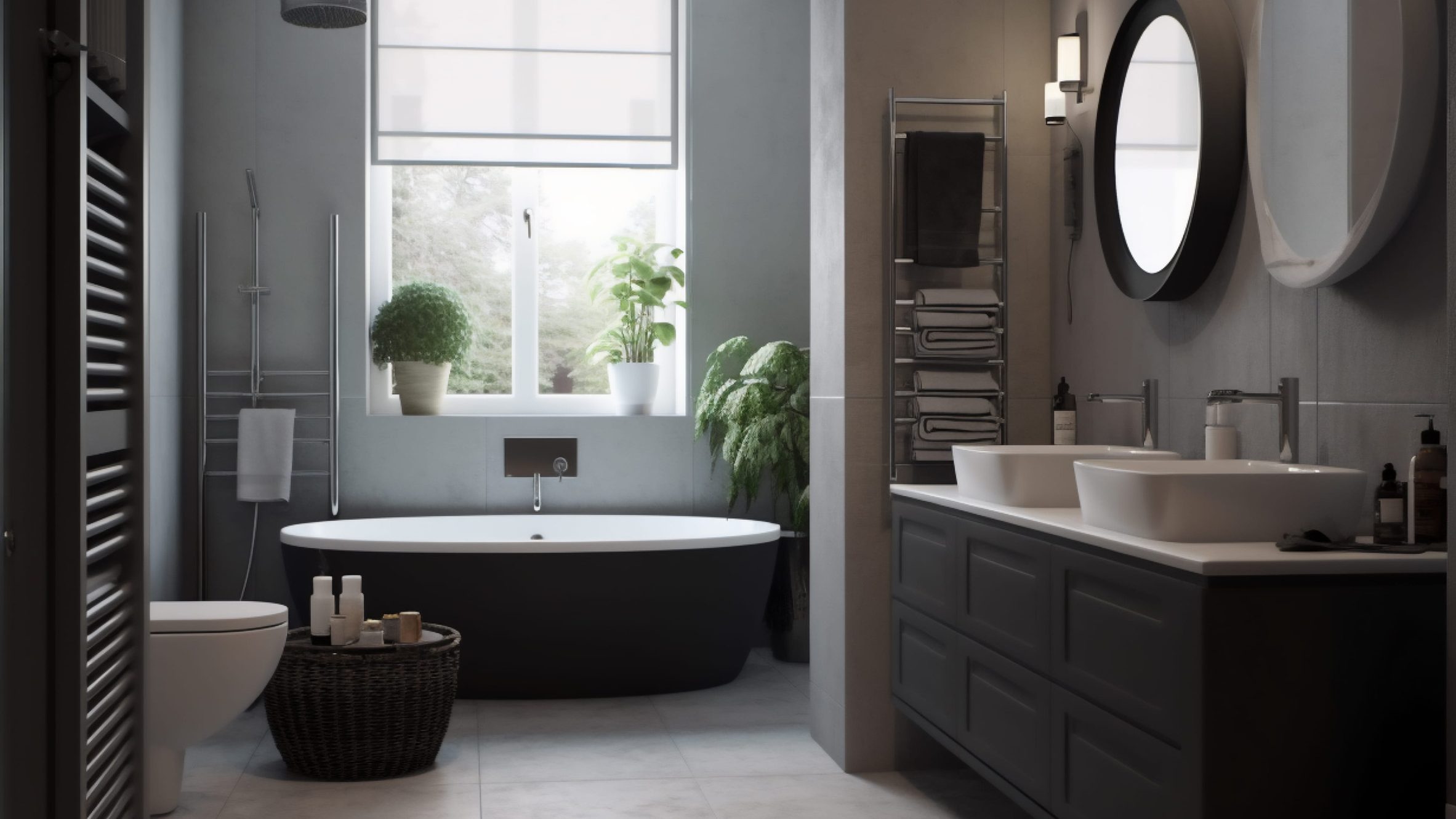
Interior of modern bathroom with gray walls, tiled floor, comfortable bathtub and round mirror. 3d rendering
The greatest hits of plumbing mistakes:
Incorrect pipe gradients: Waste pipes need to fall at the right angle (typically 1:40 for foul drainage under 1 litre per second flow). Too steep and you’ll get gurgling and trap seal loss. Too shallow and, well, things won’t flow as they should. Neither scenario is pleasant.
Mismatched pipe sizes: That 40mm waste pipe might look similar to a 32mm one, but try connecting them incorrectly and you’ve created a bottleneck that’ll cause blockages faster than you can say “where’s that plumber’s number?”
Inadequate support: Pipework needs proper bracketing. Unsupported pipes will sag, leak, and eventually fail—usually at the most inconvenient time possible (like Christmas Day when we’re fully booked).
Neglecting water pressure: Installing a power shower without checking if your system can handle it is like putting a Formula One engine in a Fiat Panda. Technically possible, but the results won’t match expectations.
Forgetting isolation valves: These little devices let you service individual fixtures without shutting off water to the entire house. Future you will be very grateful they’re there.
Cross-threading or over-tightening connections: Just because it’s tight doesn’t mean it’s right. We’ve seen more cracked fittings from excessive enthusiasm with a wrench than we care to count.
Here’s the thing about plumbing: when it works properly, it’s invisible. You turn the tap, water flows at the right pressure and temperature, and it drains away smoothly. When it doesn’t work, you’re either standing in a puddle or waiting ages for a tepid trickle. Getting the plumbing right from the start—with properly sized pipes, correct falls, and secure connections—is worth every penny.
Lighting and electrics: more than just a bulb above the mirror
Let’s talk about bathroom lighting, because one lonely bulb casting shadows across your face whilst you’re trying to apply eyeliner or shave is nobody’s idea of functional design. Proper bathroom lighting requires careful planning, and when you add electricity and water to the equation, safety regulations become absolutely critical.
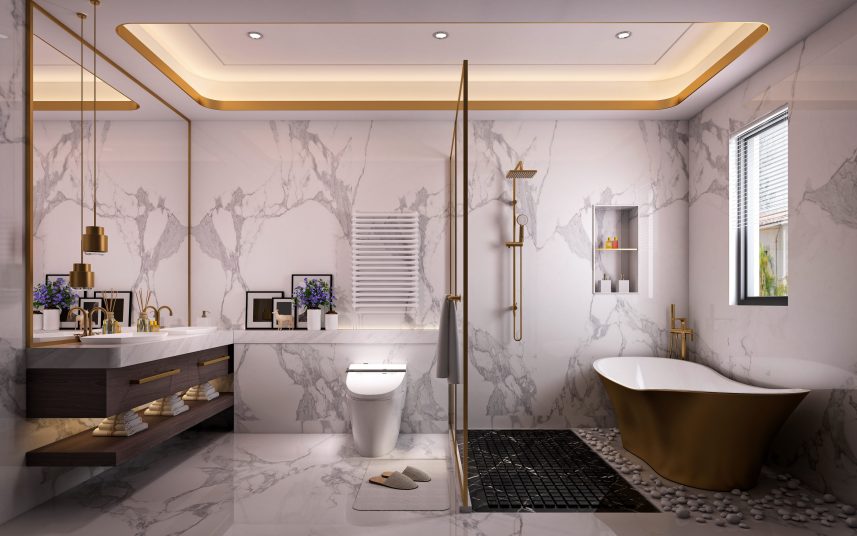
The IET Wiring Regulations (BS 7671:2018) define specific bathroom electrical zones based on proximity to water sources:
- Zone 0: Inside the bath or shower tray (requires IP67-rated fittings, 12V maximum)
- Zone 1: Above the bath or shower up to 2.25 metres (requires IP65 rating)
- Zone 2: Within 60cm around the bath or shower, up to 2.25 metres high (requires IP44 rating)
- Outside these zones: Standard IP ratings apply, though IP-rated fittings are still recommended
All electrical work in these special locations is notifiable under Part P of the Building Regulations and must be carried out by a qualified electrician. This isn’t an area where “my mate who’s handy with electrics” is an acceptable solution—it’s about safety and legal compliance.
Lighting design mistakes to avoid:
- Relying solely on overhead lighting: Creates unflattering shadows and inadequate task lighting
- Ignoring IP ratings: Installing non-rated fittings in wet zones is dangerous and illegal
- Poor bathroom mirror lighting: Position lights either side of mirrors rather than just above for better illumination
- Forgetting dimmers: These allow you to adjust lighting for different times of day and moods
- Inadequate bathroom zones planning: All circuits in bathrooms should be RCD-protected
Layer your lighting with ambient (general overhead), task (mirror/vanity), and accent lighting (LED strips, feature lighting) to create a bathroom that’s both functional and atmospheric. And please, always use a qualified electrician for anything beyond changing a bulb.
Fixtures and fittings: style meets substance for flawless bathroom design
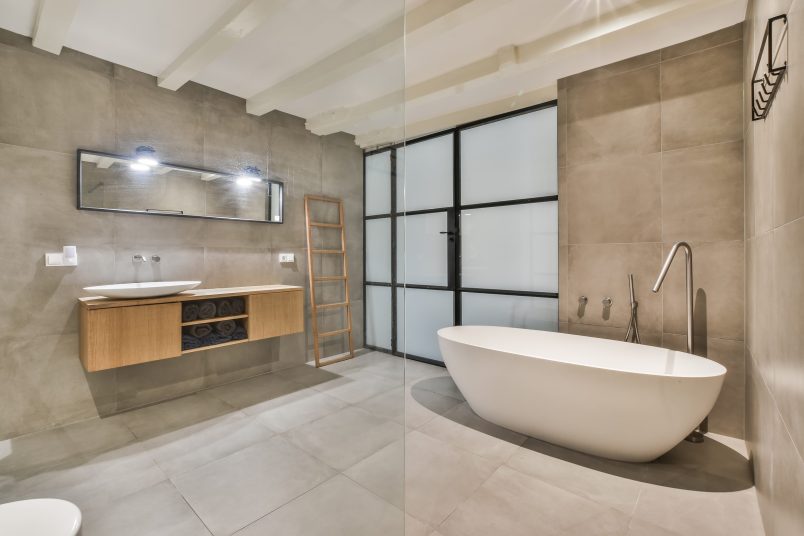
Bright and stylish bathroom with luxury bathtub
Here’s where bathroom dreams can quickly turn into buyer’s remorse nightmares. That stunning brass tap set looked magnificent in the showroom, but will it actually work with your water pressure? And is that frameless glass shower screen as practical as it is beautiful?
Common fixture selection mistakes:
- Prioritising aesthetics over functionality: That sculptural basin might be a work of art, but if it splashes water everywhere when you use it, you’ll grow to resent its beauty.
- Ignoring water pressure requirements: Mixer showers, rainfall heads, and body jets all have minimum pressure requirements. Installing them with inadequate pressure delivers disappointing results.
- Choosing the wrong trap configuration: Space-saving bottle traps look sleek but can be prone to blockages. Traditional P-traps are more reliable for main basins.
- Skimping on quality: Budget taps might save money initially, but they’ll likely drip, corrode, or break within a few years. Mid-range quality from reputable manufacturers offers the best value.
- Improper installation: Even high-quality fixtures will fail if they’re not installed correctly. Loose connections, missing washers, or incorrect mounting will cause problems regardless of how much you spent. Improper installation is a surefire way to take the shine off of your underfloor heating.
The ALK Emergency Plumbers team has extensive experience installing all types of bathroom fixtures. We can advise on what will work best for your specific setup and ensure everything is fitted to manufacturer specifications. Because a beautiful bathroom that actually functions as intended? That’s the dream.
Budgeting for the unexpected: it’s not just for fancy towels
Every renovation has surprises. You might discover dodgy plumbing from the 1970s that needs replacing. That wall you thought was plasterboard might turn out to be something more challenging. The subfloor might need additional work before tiling. These aren’t disasters—they’re just the reality of renovation projects.
Yet one of the most persistent bathroom design mistakes is failing to budget for contingencies. Setting aside 10-20% of your total budget for unexpected issues isn’t pessimistic—it’s sensible planning. It means you won’t be caught short when reality doesn’t quite match your initial assumptions.
Other budgeting considerations:
- Professional labour costs (which are worth it for complex work)
- Proper materials rather than the cheapest options
- Disposal of old fixtures and materials
- Temporary facilities if your only bathroom is out of action
- Aftercare and maintenance products
A bathroom renovation is an investment in your home. Whilst it’s tempting to cut costs wherever possible, certain aspects—waterproofing, plumbing, electrics, and ventilation—simply aren’t negotiable. Skimping in these areas to afford fancier tiles or fixtures is a false economy that’ll cost far more when things go wrong.
Frequently asked questions
How long does a typical bathroom renovation take?
A complete bathroom renovation usually takes 2-3 weeks, though this varies based on the scope of work. Simple refreshes might take a week, whilst complex wet room installations or significant structural changes can take longer. Proper planning and experienced professionals can keep delays to a minimum.
Do I need Building Regulations approval for my bathroom renovation?
Certain works require approval, including new drainage systems, structural changes, significant plumbing alterations, and all electrical work in bathrooms (which must comply with Part P). A professional can advise on what’s notifiable for your specific project.
Can I install a wet room in any home?
Most homes can accommodate a wet room, but it requires proper assessment of floor construction, adequate drainage falls, and comprehensive waterproofing. Ground floor installations are generally more straightforward than upper floors, which need careful consideration of load-bearing capacity and waterproofing to prevent leaks to rooms below.
Out of all of the bathroom design mistakes, what’s the most important thing to get right?
Waterproofing, hands down. Everything else can be adjusted or upgraded later, but poor waterproofing leads to structural damage that’s expensive and disruptive to repair. Invest in professional-grade tanking systems and proper installation from the start.
How much should I budget for a bathroom renovation?
Budget bathrooms can start from £3,000-£5,000, mid-range renovations typically cost £5,000-£10,000, and high-end installations can exceed £15,000. Always add 10-20% contingency for unexpected issues. Remember that spending appropriately on hidden elements (plumbing, waterproofing, ventilation) is just as important as visible finishes.
Should I do any of the work myself?
Simple tasks like painting, removing old fixtures (with water turned off), or demolition can be DIY-friendly. However, plumbing, electrical work, waterproofing, and tiling require professional skills and experience. Mixing DIY with professional work can actually increase costs if mistakes need correcting.
Your dream bathroom, done properly
Bathroom renovations don’t have to be the stuff of horror stories. With proper planning, quality materials, correct installation techniques, and realistic budgeting, you can create a beautiful, functional bathroom that’ll serve you well for decades to come.
The key is knowing when to seek professional help. At ALK Emergency Plumbers, we’ve been designing and installing bathrooms across Essex for years. We understand Building Regulations, we know which products perform best, and we’ve developed systems that deliver exceptional results efficiently. More importantly, we’ve seen what happens when bathroom renovations go wrong—and we’re committed to ensuring our clients avoid those expensive pitfalls.
Whether you’re planning a complete bathroom overhaul or need expert guidance on a specific aspect of your renovation, our experienced team is here to help. We offer free consultations and quotes, and we’re happy to discuss your project in detail before you commit to anything.
Don’t let your bathroom dreams turn into a DIY disaster. Contact ALK Emergency Plumbers today or request your free quote online. Let’s create the bathroom you’ve been dreaming of—without the nightmares.
Because when it comes to bathroom renovations, the most expensive mistake is thinking you can’t afford professional help. Trust us, you can’t afford not to.