Quick answer: A gurgling plughole is caused by trapped air being forced through the water in your U-bend, usually due to a partial blockage, a venting problem, or an issue further down the drain. Most single-fixture gurgles can be fixed at home, but gurgling across multiple drains—or anything accompanied by sewage smells—needs a professional.
That sound your sink makes when you pull the plug. You know the one. A low, burbling groan, like your drain is trying to start a conversation. It’s easy to shrug off, but a gurgling plughole is usually your plumbing’s way of waving a flag—and ignoring it tends to make things worse.
The good news? In many cases, it’s a fairly simple fix. In this post, we’ll walk you through the most common causes, some safe DIY checks you can try, and the clear signs that it’s time to stop tinkering and call us out.
What a gurgling plughole is actually telling you
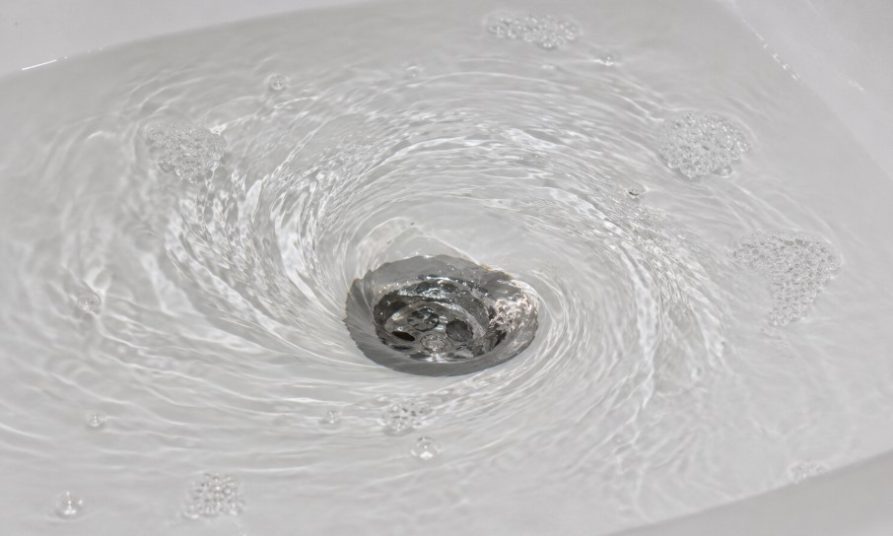
Plugholes gurgle when air gets trapped in your pipework and forces its way through the water sitting in the U-bend beneath your sink, bath, or shower. That bubbling, gurgling sound is essentially air escaping—and the fact that it’s escaping through your plughole, rather than through the vent system where it should be, tells you something’s not right.
Common signs that go hand-in-hand with gurgling include:
- Water draining slowly or pooling around the plughole
- A bad smell coming from the drain (often a sewer-like odour)
- Bubbles appearing in the toilet bowl when you run the bath
- Water backing up slightly before draining
If you’re experiencing more than one of these together, it’s worth taking it seriously rather than hoping it sorts itself out.
The most common causes of a gurgling plughole
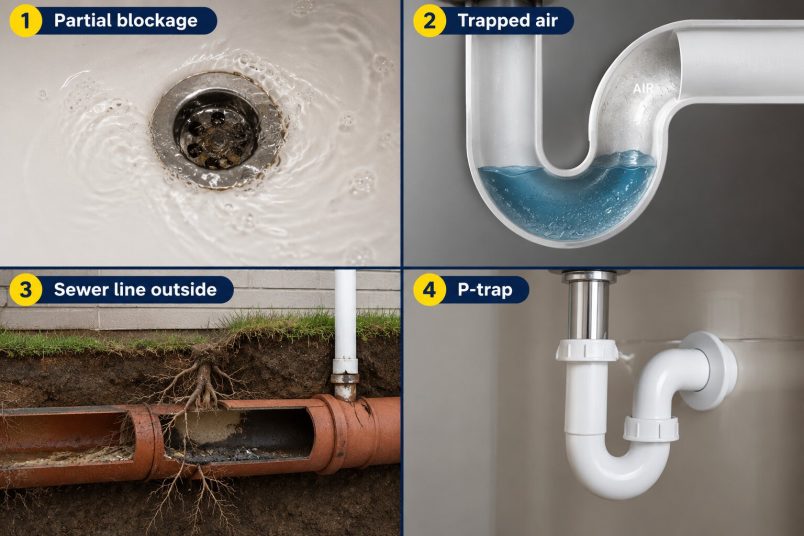
Partial blockage (the usual suspect)
A blocked sink gurgling is, more often than not, a partial clog. It doesn’t have to be a full blockage to cause problems—even a narrowed pipe can disrupt airflow and create that tell-tale noise.
In the kitchen, the culprit is usually grease, fat, and food debris clinging to the inside of the pipe. In bathrooms, it’s hair and soap scum building up in the trap over time. The blockage forces air to take the path of least resistance—which is back up through your plughole.
What you’ll notice: Gurgling from one specific fixture, slow draining, and sometimes a slight smell.
Trapped air or poor venting (soil vent pipe issues)
Your drainage system relies on a network of vent pipes—usually a vertical pipe running up through the roof—to regulate air pressure. When water flows down the drain, air needs to enter the system to replace it. If the vent pipe is blocked (by debris, frost, or even a nesting bird), the system compensates by pulling air through your plughole instead.
What you’ll notice: Gurgling that happens across multiple fixtures, especially when you flush the toilet or empty the bath.
Problems further down the drain run
If several plugholes in your home are gurgling at once, the issue may be in the main soil pipe or even the sewer line outside your property. Causes include tree root intrusion, a collapsed pipe section, or years of fat and grease accumulation. Left unattended, this kind of blockage can lead to sewage backing up into your home—which is every bit as unpleasant as it sounds.
What you’ll notice: Widespread gurgling across different rooms, outside drain gullies overflowing, or foul smells from multiple sources.
P-trap or water seal issues (including evaporation in unused drains)
The P-trap—the curved section of pipe beneath every sink and bath—holds a small amount of water to act as a barrier against sewer gases. If a drain hasn’t been used for a while (think: a guest bathroom or utility room sink), that water can evaporate and leave the trap dry. Without the water seal, both smells and gurgling noises can travel back up through the pipe freely.
What you’ll notice: Gurgling and/or smells from drains that are rarely used.
Over-reliance on chemical drain cleaners
Caustic chemical cleaners can dissolve some blockages, but they don’t fix the underlying issue—and used repeatedly, they can damage PVC pipework and corrode older joints. They tend to mask the problem rather than solve it, which means the gurgling comes back before long.
Quick checks to pinpoint the cause
Before you start reaching under the sink, run through this quick checklist:
- Is it one fixture or several? Localised gurgling usually means a blockage; widespread gurgling points to venting or main drain issues.
- Does it happen when the toilet flushes? A strong indicator of a venting problem.
- Is the water draining slowly? Likely a partial blockage.
- Any bad smells? Could be a dry trap, or worse, sewer gas getting in.
- Any signs of overflow outside? Check gullies and inspection covers for standing water.
If you’re seeing multiple red flags—especially sewage smells, water backup, or overflowing outside drains—stop and give us a call. That’s not a job for a DIY Sunday afternoon.
How to stop a noisy drain (safe DIY fixes you can try)
Step 1: Clear the plughole cover and visible gunk (yes, it’s grim)
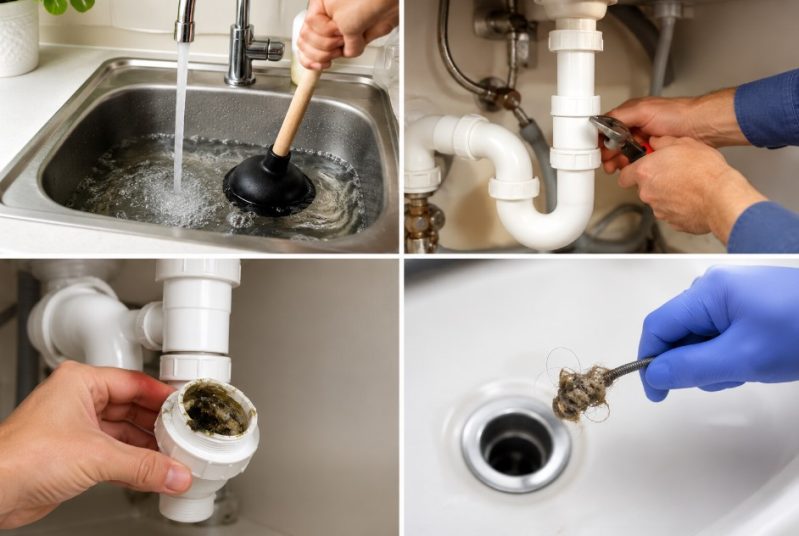
Pop on some rubber gloves and remove the plughole cover if it lifts off. Clear out any visible hair, debris, or built-up residue. Then run the hot tap (not boiling if you have plastic pipes) for a few minutes to flush things through. You’d be surprised how often this alone makes a difference.
Step 2: Try a proper plunge (the right way)
Seal the overflow hole with a damp cloth—this is important, as it stops the pressure you’re creating from just escaping out the wrong way. Use a cup plunger and apply short, firm plunges. Test the drainage after six to eight pumps and repeat if needed.
Step 3: Use a drain snake or zip tool for hair clogs
A cheap plastic zip tool or a basic drain snake is excellent for hair-related blockages in showers and baths. Feed it down slowly and rotate gently. If you hit strong resistance, stop—forcing it can push the blockage further down or damage the trap.
Step 4: Flush with hot water and washing-up liquid (kitchen sinks)
For kitchen sink gurgling caused by grease, squirt a good amount of washing-up liquid down the plughole, followed by several kettlefuls of hot (not boiling) water. The dish soap helps break down fatty deposits, and the hot water carries them through. It’s a gentler, safer alternative to harsh chemicals.
Step 5: Check and clean the trap (only if you’re comfortable)
Place a towel and bucket under the U-bend, then unscrew the trap slowly—it will be full of water. Empty it, clean out any debris, and refit carefully, making sure it’s hand-tight. Run the tap afterwards to check for leaks.
What to avoid
- Caustic chemical cleaners (can damage pipes and won’t fix venting issues)
- Pouring boiling water into PVC waste pipes (warps the fittings)
- Pushing debris deeper with repeated flushing
- Dismantling pipework beyond the trap if you’re not confident with plumbing
When gurgling means “call a plumber”
Some problems are simply beyond what a plunger and a bit of patience can handle. Call us if you’re dealing with any of the following:
- Gurgling across multiple drains or fixtures
- Water backing up into sinks, baths, or shower trays
- A persistent sewage smell that won’t clear
- Repeated blockages coming back within days or weeks of a DIY fix
- An outside drain that’s overflowing or slow to clear
- Any situation that feels urgent—especially if it’s affecting your ability to use bathrooms or the kitchen
We’re on call 24/7, and our team aims for a 1-hour response across Essex and surrounding areas. Our call-outs are free, so you won’t be paying just to have someone come and take a look.
How we fix a gurgling plughole (what a professional visit looks like)
When our team arrives, we don’t just treat the symptom—we try to understand why it’s happening in the first place. That means checking whether the issue is localised (a blocked trap or partial clog in the pipe run) or whether it’s a venting or main drain issue that needs more involved work.
Depending on what we find, we might use high-pressure water jetting to fully clear the blockage, or carry out a more detailed inspection of the drainage run. For recurring issues, we’ll also offer honest advice on what’s causing the pattern—whether that’s a fat build-up problem, a structural issue with the pipe, or a venting configuration that needs sorting.
How to prevent a gurgling plughole coming back
The best noisy drain fix is the one you never need. A few simple habits can keep things quiet:
- Use a sink strainer to catch food and debris before it reaches the drain
- Never pour fats, oils, or grease down the kitchen sink
- Run hot water down the kitchen drain for a minute after washing up
- Fit a hair catcher in the shower or bath plughole
- Run water in guest bathrooms and utility rooms regularly to keep the trap seals intact
- Don’t ignore slow-draining sinks—they’re usually a blockage in the early stages
Frequently asked questions
Is a gurgling plughole always a blockage?
Not always. A blockage is the most common cause, but gurgling can also point to a venting problem (a blocked or absent soil vent pipe), a dry P-trap, or an issue further along the drainage system. If the gurgling is limited to one fixture, a blockage is likely. If multiple drains are affected, the problem’s usually deeper in the system.
Why does my sink gurgle when I flush the toilet?
This is a classic sign of a venting issue. When the toilet flushes, a large volume of water moves quickly through the shared drain run, compressing the air in front of it. If the vent pipe isn’t working properly, that air has nowhere to go but backwards—through your sink trap and up the plughole.
Can a gurgling drain be dangerous?
In most cases, a gurgling drain is more of an inconvenience than an emergency. But if it’s accompanied by sewage smells, water backing up, or overflow from outside drains, the situation can deteriorate quickly. Sewer gas contains harmful compounds, and a fully blocked drain can lead to sewage flooding into your property if left too long.
What’s the fastest noisy drain fix I can try at home?
Start with a plunger—properly used, with the overflow sealed. If that doesn’t shift it, try hot water and washing-up liquid for a kitchen sink, or a zip tool for a shower or bath drain. These steps will resolve a surprising number of straightforward blockages without the need for any special equipment.
Why does my plughole gurgle and smell?
The smell usually means that sewer gas is finding a way back into the room. This happens when the water seal in the P-trap is disrupted—either because it’s been siphoned out by pressure changes in the pipe, or because the trap has dried out in a little-used drain. A gurgle combined with a bad smell is worth investigating promptly.
Should I use chemical drain cleaner for a blocked sink gurgling issue?
We’d generally advise against it as a go-to solution. Chemical cleaners can clear some soft blockages, but they don’t address venting problems, and repeated use can damage PVC pipes and joints. Enzyme-based cleaners are a safer, more eco-friendly option for minor maintenance, but for a proper blockage, a plunger or drain snake will do a better job.
If only one plughole is gurgling, is it still serious?
A single gurgling plughole usually points to a localised blockage or trap issue—manageable, and often fixable with the DIY steps above. It becomes more serious if the gurgling keeps coming back after you’ve cleared it, or if it’s joined by slow drainage and smells. Recurring issues usually mean the root cause hasn’t been found.
When should I call an emergency plumber in Essex?
Call us if you’ve got gurgling across several drains, sewage smells, water backing up, or an outside drain that’s overflowing. These are signs of a main drain or sewer line problem that needs professional equipment to diagnose and fix. We’re available around the clock—don’t wait until a small problem becomes a much bigger one.
Need help with a gurgling plughole in Essex?
If you’ve worked through the DIY steps and the gurgling’s still there—or if something about the situation doesn’t feel right—we’re here to help. Our team covers Essex and the surrounding areas, we offer free call-outs, and we aim to be with you within the hour for emergency situations.
Give us a call or drop us an email. We’ll get to the bottom of it—without any unnecessary drama (or smell).