Ignoring a dripping tap wastes about 1,825 litres of water a year, quietly pushes up your water bill, and can turn a small fault into water damage, mould, and a much bigger repair bill. A drip often points to a worn seal or faulty cartridge that will not improve on its own, so fixing it early—or calling a professional—usually costs less than leaving it.
That tap you’ve been meaning to sort? The one that goes drip… drip… drip at three in the morning? It’s not just annoying—it’s billing you. Every single day, whether you’re home or not. If it’s the hot tap, it can also add to your energy costs, and over time the constant leak can damage fittings, surfaces, and the area around the sink.
Most people put off fixing a dripping tap because it seems like a minor inconvenience. And honestly, one drip doesn’t feel urgent compared to everything else on the to-do list. But the maths tells a different story. A slow, steady drip adds up to hundreds—sometimes thousands—of litres of wasted water every year, and on a metered supply that waste shows up directly on your bill while needlessly increasing your environmental impact.
For homeowners and residents in Essex and the surrounding areas, this guide explains the real cost of a dripping tap, the common causes behind it, what you can safely check and fix yourself, when to call a plumber, the risks of leaving it alone, and how to help stop it happening again. No fluff—just the honest truth about what ignoring a dripping tap actually costs you.
Why a “small drip” isn’t actually small
A drip is never just a drip. It’s a symptom. Something inside the tap—a washer, a ceramic cartridge, an O-ring—has started to fail. And here’s the thing: once a seal starts to go, it doesn’t magically recover on its own. It keeps wearing.
Water pressure, temperature changes, and limescale all make the problem worse over time. What starts as a slow, occasional drip can become a steady trickle within weeks or months. The longer it’s left, the more worn the components become, and the harder (and more expensive) the repair gets.
It’s never just a drip—taps love a dramatic sequel.
Leaking tap cost: what that wasted water can add to your bill
So, how much does a dripping tap actually cost? The honest answer: it depends on the drip rate and your water tariff. But here are some useful ballpark figures based on commonly cited data from Anglian Water, who supply much of Essex.
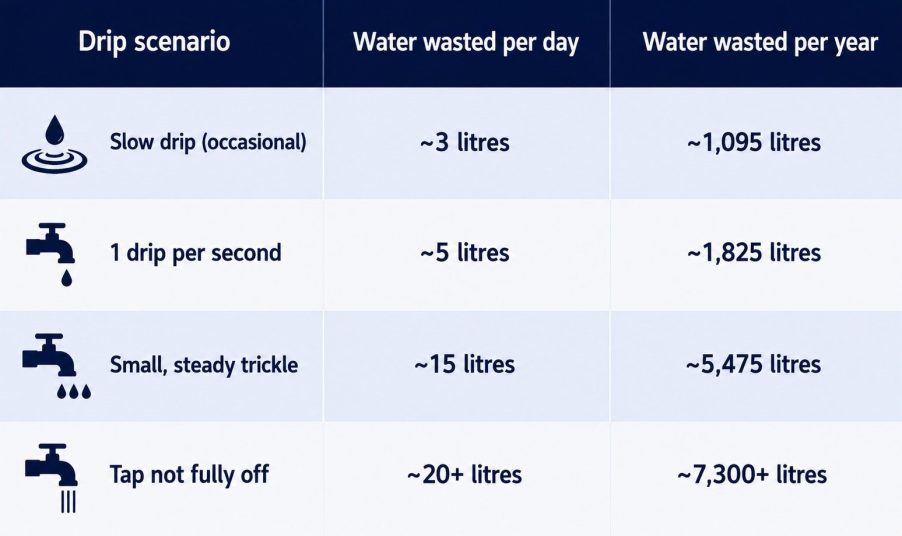
According to Anglian Water, a dripping tap can waste over 3 litres of water every day—more than 1,000 litres a year. A faster, more persistent drip can push that figure significantly higher.
Here’s a simple breakdown to give you an idea of the scale:
On a metered supply, every litre counts toward your bill. Water tariffs vary depending on your provider and region, but when you factor in both the water supply and sewerage charges together, the cost of a leaking tap water bill impact can range from a few pounds a year (slow drip) to well over £30 a year (persistent trickle)—and that’s per tap. Fixing a tap dripping can save about £7.74 a year, something many homeowners do not fully realise. Many households have multiple dripping taps running simultaneously, and that’s before you factor in whether any of them are hot.
A hot dripping tap doesn’t just waste water—it wastes heated water, which means your energy bill takes a hit too. Heating water accounts for a significant chunk of home energy use, so a dripping hot tap is effectively two bills bleeding at once.
If you’d rather stop paying for water you’re not using, we can sort it quickly. Call us or get a free quote.
The hidden costs beyond water waste: damage, mould, and bigger repairs
Here’s where ignoring a dripping tap can get genuinely expensive. The water bill impact is frustrating, but the physical damage a slow leak can cause over time? That’s potentially a lot more serious.
Water staining on basins, sinks, and worktops is usually the first sign, and constant trickling can also leave mineral deposits and staining. Then you might notice swollen cabinet doors under the sink, softening of worktops around the tap base, or grout failure in tiled areas. Leave it long enough and you’re looking at mould growth inside enclosed vanity units—which isn’t just unsightly, it’s a health concern, because damp conditions and excess moisture create an ideal breeding ground for mould and mildew. That can affect indoor air quality and cause respiratory problems, while prolonged exposure may also trigger allergies or skin irritations.
Mixer taps that drip from the base rather than the spout deserve particular attention. That kind of drip often points to an internal seal failure, meaning water could be tracking along pipework or pooling inside cabinetry long before you notice any visible damage.
Beyond further plumbing issues, a dripping tap also has an environmental impact because it’s wasting water and adding energy demand for treatment; if you ignore it, that can lead to unnecessary resource waste. Ignoring a dripping tap increases energy consumption for water treatment.
The rule of thumb here is simple: early fixes are always cheaper than replacing flooring, cabinetry, or treating mould. If you’ve already noticed damp patches, discolouration, or a musty smell near the sink, it’s worth getting it checked sooner rather than later.
Common plumbing problems that cause taps to drip
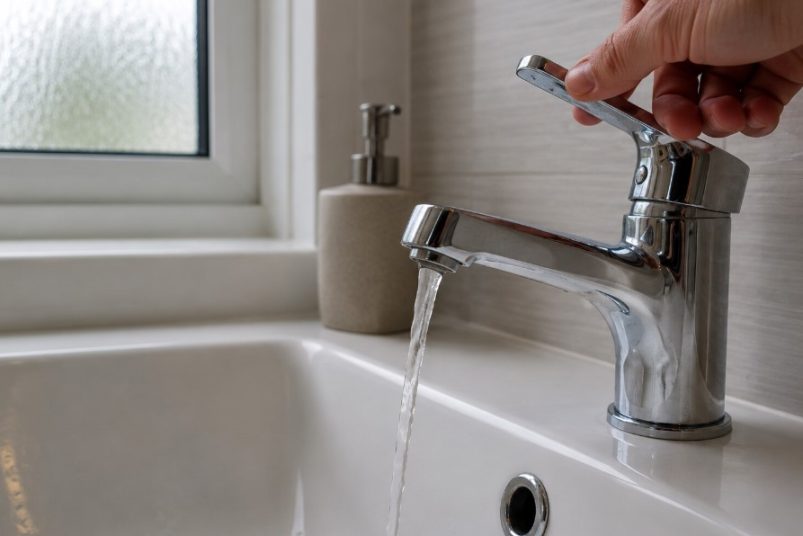
There are several culprits behind a dripping tap, and understanding which applies to yours can help you decide whether it’s a DIY job or a job for us.
- Worn washer – the classic cause in traditional pillar taps. The rubber washer wears down over time and eventually flattens or perishes under the constant pressure of being pressed against the valve seat.
- Worn ceramic cartridge – common in modern mixer taps. Cartridges can crack or wear down, and in ceramic disc taps the drip may be caused by scratched or dirty discs, especially in hard water areas where limescale is a factor.
- Limescale and grit – tiny mineral deposits damage seals over time, and limescale build up can clog or damage sealing parts, preventing them from forming a proper seal even when new.
- High water pressure – if the pressure in your home is too high, it forces water past seals that should otherwise hold fine.
- Perished O-rings – small rubber rings around the valve body. When these go, you’ll often see dripping at the spout handle or tap base rather than the spout itself.
- Poor previous repairs – fitting the wrong washer or cartridge type is surprisingly common, and often leads to a tap that drips again within weeks.
Quick checks you can do at home before calling us
Before reaching for the phone—or a spanner—here are a few things worth checking:
Where is the drip coming from? A drip from the spout usually means a worn washer or cartridge. A drip from the base of the tap or under the sink is a different problem and often more serious.
Look for moisture under the sink. Open the cabinet and do a quick visual. Any damp patches, staining on the base board, or softness in the wood means water has been sitting there for a while.
The tissue test. Run a dry piece of tissue or kitchen roll along joints and connections under the sink. If it picks up any moisture, there’s a slow leak somewhere.
Check your water meter. If you’re on a metered supply, make sure every tap, shower, and appliance is turned off, then check whether the meter dial is still moving. Movement when nothing should be running means water is leaking somewhere in the system.
One important note: if you’re not sure whether you can isolate the water supply to the tap, or if the shut-off valve under the sink is seized, stop there. Don’t attempt to dismantle a tap on a live supply—especially if it connects to a combi boiler or hot water system.
How to fix a dripping tap in the UK: DIY or call a plumber?
When DIY might be fine
If you’re fairly practical, have basic tools, and can clearly identify what type of tap you’re dealing with, a simple washer or cartridge swap is manageable. The key steps:
- Isolate the water supply first (usually the isolation valve under the sink—quarter turn with a flathead screwdriver).
- Protect the plughole so small parts don’t disappear.
- Take photos before removing anything—they’re invaluable when it comes to reassembly.
- Match the replacement washer or cartridge exactly to the original, and keep any markers or grooves in line to help ensure correct reassembly.
Confident homeowners can tackle a simple dripping tap repair themselves if the fault is straightforward.
When it’s time to call in a professional
There are situations where DIY isn’t worth the risk:
- You can’t isolate the water supply, or the isolation valve is seized
- The drip is coming from the base of the tap or the pipework underneath
- The tap keeps dripping shortly after you’ve changed the washer
- There are visible signs of water damage—swollen units, staining, damp smell
- You’re on a tight schedule and can’t afford to make the problem worse
That’s where we come in. Our team at ALK Emergency Plumbers is available 24 hours a day, 7 days a week across Essex, with a 1-hour emergency response target, free call-outs, and quality service from diagnosis through to a proper fix so you have one less thing to worry about.
How fast can a drip become a bigger leak?
Faster than most people expect: if you keep ignoring a dripping tap, a small leak can become a bigger one surprisingly quickly. As components wear, water escapes under pressure more freely, which accelerates further deterioration and can become a leading cause of more serious damage. Limescale buildup can cause corrosion that eats into the valve seat itself—at that point, a simple washer replacement won’t fix it; the valve seat needs re-grinding or the whole tap unit needs replacing.
Temperature fluctuations throughout the year cause pipework and fittings to expand and contract, putting extra stress on already-weakened seals. Winter is particularly unkind to older plumbing. A drip that’s been around since summer can become a proper trickle—or worse—by January.
Preventing future drips (because nobody wants tap drama twice)
A few simple habits can extend the life of your taps considerably:
- Don’t overtighten taps. It’s one of the most common causes of accelerated washer wear. Turn off firmly, not forcefully.
- Descale regularly. Aerators, shower heads, and tap spouts can be soaked in white vinegar to break down limescale before it causes seal damage. Regular maintenance helps prevent limescale damage and keeps taps working properly.
- Check your water pressure. If you’re in a hard water area and going through washers and cartridges frequently, high water pressure could be the underlying issue. Stable water flow also reduces stress on seals and cartridges. A pressure-reducing valve fitted to the mains supply can make a real difference.
- Fix small leaks early. The best prevention is not ignoring a dripping tap in the first place.
Frequently asked questions
How much water does a dripping tap waste in a day?
According to Anglian Water, a dripping tap wastes over 3 litres of water every day. A tap dripping once per second wastes around 5 litres daily. A faster trickle can waste 15 litres or more per day—adding up to thousands of litres over the course of a year.
Can a dripping tap really increase my water bill?
Yes, especially if you’re on a metered supply. A slow drip can waste over 1,000 litres annually. A more persistent trickle could waste 5,000 litres or more. At current UK water tariff rates—which include both supply and sewerage charges—that wasted water translates directly into a higher bill. Multiple dripping taps compound the effect significantly.
Is a dripping tap classed as a plumbing emergency?
A slow drip from the spout isn’t typically dangerous on its own, but it can become urgent if it’s dripping from the base of the tap, near the pipework, or if there are signs of water damage. If water is actively pooling under the sink or you can’t turn the tap off at all, that’s a situation worth treating as an emergency.
Why does my tap keep dripping after I changed the washer?
This usually comes down to one of a few things: the wrong size or type of washer was used, the valve seat itself is damaged or pitted (preventing any washer from sealing properly), or the cartridge in a mixer tap is the actual culprit rather than the washer. A quick professional inspection can identify which issue applies.
How do I know if the leak is from the tap or the pipework underneath?
Location is the key indicator. A drip from the tap spout points to an internal seal or cartridge issue. A drip from the base of the tap, from under-sink joints, or visible moisture on supply pipes suggests a pipework or fitting problem. The tissue test—running dry kitchen roll along joints—can help identify exactly where moisture is escaping.
Do I need to turn off the mains to fix a dripping tap?
Not always. Most modern sinks have isolation valves on the supply pipes directly under the basin, which let you shut off water to that tap only. If that valve is seized, corroded, or not present, you’ll need to turn off the mains supply. If you’re unsure, don’t attempt to dismantle the tap until the water is safely isolated.
Is it cheaper to repair or replace a dripping tap?
In most cases, repair is the more cost-effective option—especially if the tap is in good structural condition and the issue is a worn washer, cartridge, or O-ring. Replacement makes more sense when the valve seat is heavily corroded, the tap is very old, or repeated repairs have failed to resolve the problem. A plumber can advise which route makes more sense once they’ve had a look.
Can ALK Emergency Plumbers fix a dripping tap in Essex 24/7?
Absolutely. We cover Essex and the surrounding areas around the clock, with a 1-hour emergency response target and free call-outs. Whether it’s a simple washer replacement or something more involved, our team can diagnose and fix dripping taps quickly and efficiently.
Stop paying for a drip—get it sorted today
Dripping taps are common. They’re also completely fixable, usually quickly and without drama. The problem is that every day you leave it, you’re paying for it—on your water bill, potentially on your energy bill, and eventually in the form of damage that costs far more than the original repair.
Our team at ALK Emergency Plumbers covers Essex and the surrounding areas—including Chelmsford, Southend, Brentwood, Hornchurch, Benfleet, and Canvey Island. We’re available around the clock, offer a rapid 1-hour emergency response, and all our call-outs are completely free.
Call us or get a free quote online. We’ll get it sorted—so you don’t have to lie awake listening to it anymore.