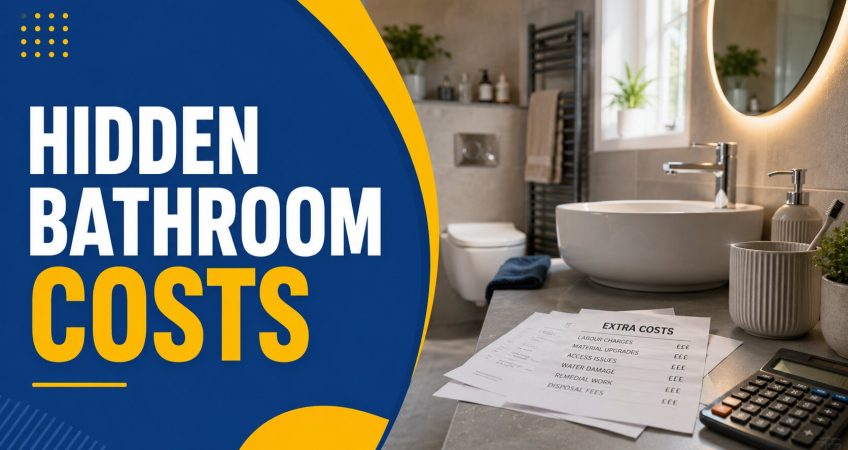
Quick answer: The most common hidden bathroom costs include strip-out surprises like rotted floors or mould, unplanned plumbing changes, waterproofing, electrical compliance work, subfloor levelling, and waste removal. Adding a 10–20% contingency to your budget and getting a thorough plumbing review before work starts can save you a significant amount.
You sat down with a cup of tea, opened a spreadsheet, and told yourself: “It’s just a bathroom refresh. How complicated can it be?” Fast forward six weeks, and you’re staring at a quote that’s somehow doubled, a subfloor that’s seen better days, and a plumber who’s just discovered your soil pipe is running the wrong way.
Sound familiar? You’re not alone.
Bathroom renovations are one of the most rewarding home improvements you can make — but they’re also one of the most reliably underbudgeted. Not because tradespeople are pulling numbers out of thin air, but because bathrooms are genuinely good at hiding problems until you start pulling things apart.
This guide is here to change that. We’ll walk you through the most common bathroom hidden costs, give you a practical breakdown of what to expect, and share a checklist for comparing quotes so you can go in with your eyes open. No horror stories, no scaremongering — just straight, practical advice.
What people mean by “hidden bathroom costs” (and why they’re so common)
“Hidden” doesn’t always mean unexpected. Often, it means: not included in the headline quote, only discovered after strip-out, or assumed to already be covered by someone else.
Bathrooms are uniquely prone to concealed problems. Moisture, years of condensation, old pipework, questionable DIY electrics, and uneven walls all tend to lurk behind tiles and under floorboards. The moment the first tile comes off, you find out what you’re really working with.
The good news? Most of these issues are manageable — as long as you’ve factored in some room to manoeuvre.
Bathroom suite renovation cost breakdown: the obvious costs vs the sneaky ones
Here’s a quick bathroom renovation cost breakdown to give you a sense of where budgets actually go:
The obvious stuff:
- Bathroom suite (bath, toilet, basin)
- Shower enclosure or wet room fittings
- Taps and fixtures
- Wall and floor tiles
- Labour (fitting and tiling)
The less obvious stuff:
- Strip-out and waste disposal
- Remedial plumbing and pipework changes
- Electrical work and certification
- Waterproofing and tanking
- Subfloor repair and levelling
- Plastering and wall prep
- Ventilation upgrades
- Boxing-in and finishing details
According to Checkatrade, many standard bathroom renovations in the UK cost between £5,000 and £10,000 once labour, plumbing, tiling, and fixtures are all included. That range exists precisely because of how much varies once the strip-out reveals what’s underneath.
The most common new bathroom hidden costs (and how to dodge them)
Strip-out surprises: rotted floors, blown plaster, mould
This is the big one. Old moisture damage, long-term leaks, and inadequate ventilation create a perfect environment for rot and mould — none of which is visible until the old suite comes out. Replacing damaged floorboards, cutting out blown plasterboard, and treating mould all add time and incur additional costs.
What to do: If the room’s had ongoing condensation issues or there’s any history of leaks, budget for remedial work from the outset. It’s better to allow for it and not need it than the reverse.
Plumbing changes you didn’t budget for
Moving a toilet or shower even half a metre is rarely a quick job. Waste pipes need to fall at the right gradient, soil pipes have strict rules about where and how they connect, and boxing everything in neatly takes time. Add in old pipework that needs replacing, corroded isolation valves, or a stopcock that’s never been turned in 20 years, and costs can climb quickly.
At ALK, we often advise homeowners to get the plumbing layout reviewed before they order their fittings. Knowing what’s feasible early means you can plan around it — rather than discovering mid-project that the shower you’ve already paid for won’t position where you’d hoped.
Water pressure and compatibility issues
Thermostatic showers, rainfall heads, and body jets all need sufficient water pressure and flow rate to perform as advertised. If you’ve got a combi boiler running multiple outlets, or low mains pressure, that dream shower may need a pump — or a rethink. A simple pressure test early in the planning process can tell you a lot.
Waterproofing and tanking (especially for wet rooms)
Tanking — the process of applying a waterproof membrane to walls and floors before tiling — is non-negotiable in a wet room and strongly recommended in any shower area. It’s also something that gets skipped when budgets are tight, often with consequences that cost far more to fix later.
Wet room design and installation is something we specialise in at ALK. Done properly, it’s a beautiful, low-maintenance option. Done without adequate waterproofing, it’s a leak waiting to happen.
Electrical work and compliance
Bathroom electrics sit within specific zones, each with defined IP (ingress protection) ratings for light fittings and other equipment. Adding a new light, a shaver socket, or upgrading an extractor fan often requires a Part P-certified electrician and a building regulations certificate. That’s a legitimate cost — and one that sometimes gets left out of initial quotes.
Ventilation upgrades
A shiny new bathroom with a twenty-year-old extractor fan is a recipe for mould within a couple of years. New rooms are often better sealed than the old ones, which means ventilation matters more, not less. Factor in a quality fan with a humidity sensor — it’ll pay for itself in reduced maintenance costs over time.
Subfloor levelling and tile prep
Large format tiles are popular, but they amplify any unevenness in the floor or walls. Levelling compound, additional adhesive, and the extra time required to get surfaces right can add meaningful cost — particularly in older properties where nothing is quite square.
Tile choices that quietly increase labour costs
Herringbone patterns, mosaic tiles, cut niches, mitred edges, and natural stone all take longer to install than standard wall tiles laid in a brick bond. That’s not a reason to avoid them — just a reason to factor in the additional labour when you’re pricing up.
Waste removal and skip permits
Someone has to take away the old suite, the broken tiles, and the ripped-out floorboards. Skip hire, a commercial van, or council permit for a street-side skip all add up. It’s worth confirming whether disposal is included in your quote before you assume it is.
Access problems and tight spaces
Tight staircases, awkward parking, long carries from the van, and heavy cast iron baths all take more time and sometimes more people. If your bathroom is on a third floor with a narrow staircase, that’s worth mentioning early.
Snagging, finishing, and “while you’re here” upgrades
Fresh silicone, new door trims, a touch of paint, a towel rail, a mirror with lighting — none of these are expensive individually, but together they add up. Budget a finishing allowance rather than treating these as afterthoughts.
Bathroom renovation checklist
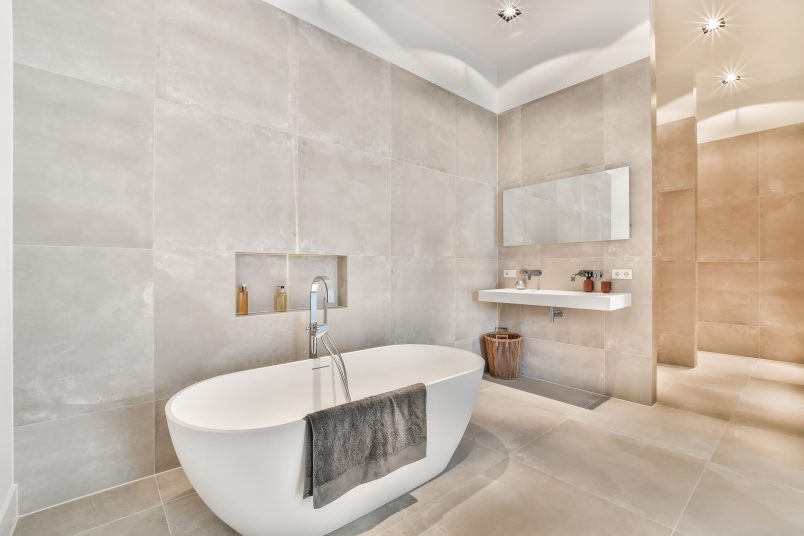
Not every quote covers the same scope. That doesn’t mean anyone’s being dishonest — it just means you need to know what questions to ask. Here’s a quick checklist:
- Does the quote include removal and disposal of the old bathroom?
- Are plumbing alterations itemised separately?
- Is waterproofing or tanking included (where relevant)?
- Are electrical works fully specified — fan, lighting, zones, and certification?
- Is prep work included: levelling, replastering, wall repairs?
- What is the client expected to supply (tiles, accessories, fixtures)?
- What’s the payment schedule and timeline?
- Are warranties and aftercare terms clearly stated?
The goal isn’t to catch anyone out. It’s to make sure you’re comparing like for like.
Your bathroom budget guide: the one number people forget (contingency)
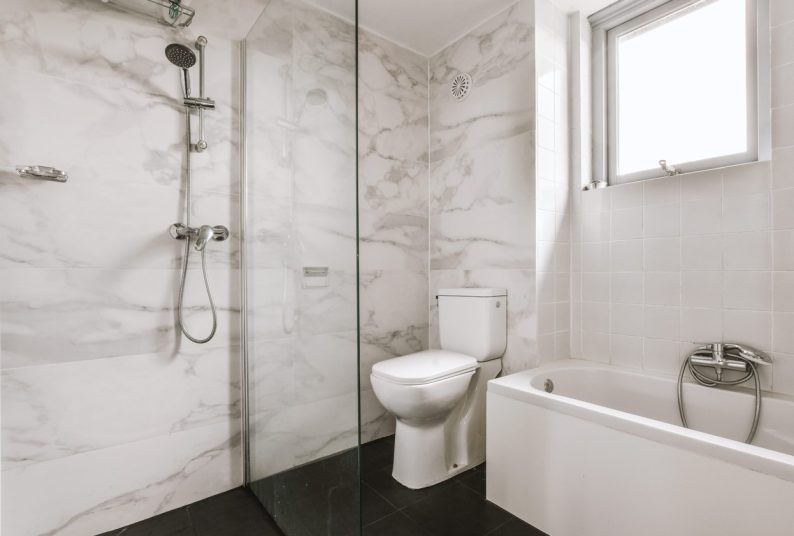
Every bathroom budget guide worth reading will tell you the same thing: add a contingency. The honest question is how much.
For a straightforward refurb in a modern property with no fixture movement, 10% is a reasonable buffer. For older homes, properties with suspected damp, or any job that involves moving the toilet or shower, 15–20% is more realistic.
The contingency isn’t pessimism — it’s just good planning. And in our experience, the jobs where something unexpected doesn’t come up are the exception rather than the rule.
When it’s worth bringing in a plumber early (and when it’ll save money)
Getting a plumber or professional bathroom fitter involved before the design is finalised — rather than after the tiles are ordered — is one of the most cost-effective moves you can make. At ALK, we’re happy to review existing pipework, assess pressure and flow, advise on sensible layouts, and flag anything that might cause problems down the line.
We’re local to Essex, we offer free quotes, and we respond quickly — including 24-hour emergency cover if something goes wrong mid-project and you need urgent help. A call before you commit to a layout costs nothing and could save you a significant amount on the job itself.
Frequently asked questions
What are the most common hidden bathroom costs in the UK?
The most common hidden bathroom costs include: strip-out damage such as rotted subfloors or mould, unplanned plumbing alterations, waterproofing and tanking, electrical work and certification, subfloor levelling, ventilation upgrades, and waste disposal. Most are only discovered after the existing bathroom has been removed.
How much contingency should I add to my bathroom renovation budget?
For a standard refurb in a modern property, a 10% contingency is a sensible starting point. For older properties, any job involving moving fixtures, or rooms with a history of damp, allow 15–20%. It’s always better to budget for it and not need it.
Why does moving a toilet or shower cost so much?
Waste pipes need to run at a specific gradient to drain correctly. Soil pipes have strict connection requirements. Moving fixtures even a short distance can mean rerouting pipework, boxing things in, and potentially lifting floorboards to achieve the right fall. That’s skilled work — and it takes time.
Do I need tanking in a walk in shower or wet room?
Yes — particularly in a wet room, where the entire floor and lower walls are regularly exposed to water. In a standard shower enclosure, tanking the immediate shower area is strongly recommended. Skipping it is a false economy: water ingress behind tiles causes damage that costs far more to fix than the tanking would have.
Can low water pressure increase bathroom installation costs and labour prices?
It can. If your water pressure or flow rate is insufficient for the shower system you’ve chosen, you may need a pump, a different shower type, or adjustments to your setup. A simple pressure and flow test before you buy any fittings can help you avoid buying the wrong equipment.
What should a bathroom renovation quote include?
A thorough quote should cover: labour, suite supply or fitting, plumbing works (itemised), tiling, waterproofing (where relevant), electrical work and certification, waste removal, and any known prep work. Always ask what’s excluded — particularly tiles, accessories, and finishing details.
How do I avoid hidden costs when buying bathroom fixtures online?
Check compatibility before you buy. Confirm that your chosen shower is suitable for your boiler type and water pressure. Measure door openings before ordering large items. And check the returns policy — a bath that doesn’t fit through the door is an expensive problem.
Who should I call if a pipe leaks during a bathroom renovation?
Call us. ALK Emergency Plumbers offer 24-hour emergency cover across Essex, and we’re experienced in picking up mid-project problems quickly. Whether it’s an unexpected leak, a burst pipe, or a pressure issue that’s appeared during the refurb, we can help get things back on track fast.
Ready to plan your bathroom without the nasty surprises?
A well-planned full bathroom remodel doesn’t have to come with unexpected bills. The key is knowing what to look for, asking the right questions, and getting the right people involved before decisions are set in stone.
At ALK Plumbing and Drainage, we help homeowners across Essex with bathroom and wet room design and installation, pre-installation plumbing reviews, and any plumbing issues that come up along the way. We offer free quotes, and we’ll give you straight answers — no jargon, no upselling, just honest advice.